
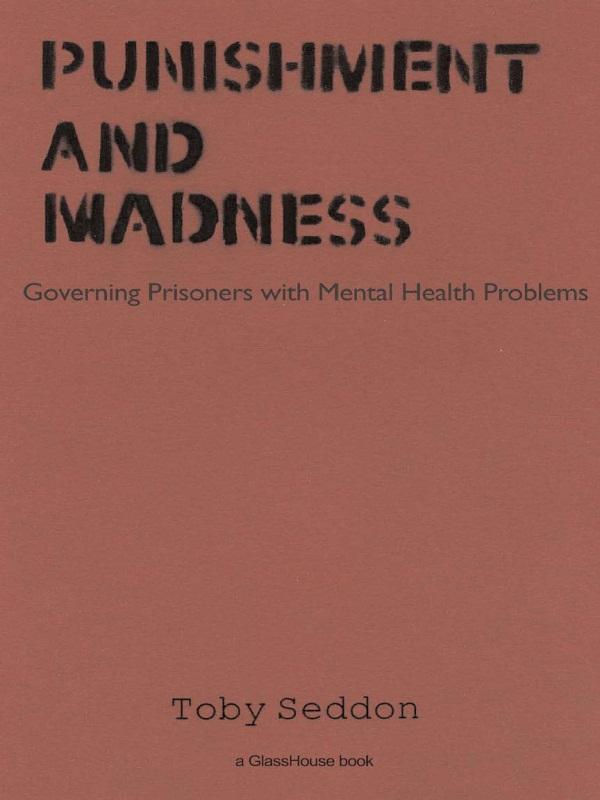
The focus of this book is on the government of prisoners with mental health problems in England and Wales over the last twenty-five years. The wider context and backdrop to the book is the shift to 'late modernity', which, since the 1970s has seen massive structural change in most Western societies, affecting the social, economic and cultural spheres, as well as the field of crime and punishment. This book investigates whether these profound transformations have also led to a reconfiguring of responses to mentally vulnerable offenders who end up in prison. Specifically, it explores how this group of prisoners has come to be viewed increasingly as sources of 'risk', requiring 'management' or containment, rather than as people suitable for therapeutic responses.
The book draws on primary research carried out by the author, including interviews with key informants involved in the field during this period, such as former cabinet ministers, senior civil servants, campaigners and academics. In conducting this investigation, the author has developed a method of research which combines and synthesizes different forms of analysis to create a novel approach to socio-historical research.
Payez facilement par carte, Klarna, Apple Pay ou Google Pay. Pas satisfait ? Vous avez toujours une garantie de remboursement de 14 jours. En savoir plus dans nos conditions. Si vous avez des questions, envoyez-nous un e-mail à hello@memmo.org.
Memmo facilite tes études, où que tu sois dans le monde. On rassemble tes manuels de cours et des outils d'étude intelligents au même endroit : résumés, quiz, podcasts et flashcards. Et il y a Ted, ton compagnon d'étude qui répond à toutes tes questions. Plus de 50 000 étudiants étudient déjà ici – conçu pour t'aider à apprendre plus vite et à moins stresser.