
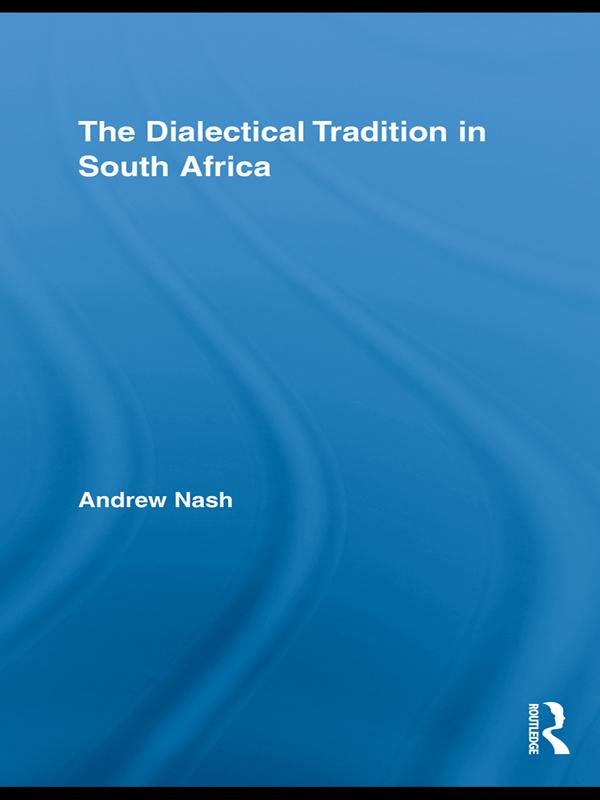
This book brings into view the most enduring and distinctive philosophical current in South African history—one often obscured or patronized as Afrikaner liberalism. It traces this current of thought from nineteenth-century disputes over Dutch liberal theology through Stellenbosch existentialism to the prison writings of Breyten Breytenbach, and examines related themes in the work of Olive Schreiner, M. K. Gandhi, and Richard Turner. At the core of this tradition is a defence of free speech in its classical sense, as a virtue necessary for a good society, rather than in its modern liberal sense as an individual right. Out of this defence of free speech, conducted in the face of charges of heresy, treason, and immorality, a range of philosophical conceptions developed—of the self constituted in dialogue with others, of freedom as transcendence of the given, and of a dialectical movement of consciousness as it is educated through debate and action. This study shows the Socratic commitment to "following the argument where it leads," sustained and developed in the storm and stress of a peculiar modernity.
Payez facilement par carte, Klarna, Apple Pay ou Google Pay. Pas satisfait ? Vous avez toujours une garantie de remboursement de 14 jours. En savoir plus dans nos conditions. Si vous avez des questions, envoyez-nous un e-mail à hello@memmo.org.
Memmo facilite tes études, où que tu sois dans le monde. On rassemble tes manuels de cours et des outils d'étude intelligents au même endroit : résumés, quiz, podcasts et flashcards. Et il y a Ted, ton compagnon d'étude qui répond à toutes tes questions. Plus de 50 000 étudiants étudient déjà ici – conçu pour t'aider à apprendre plus vite et à moins stresser.