
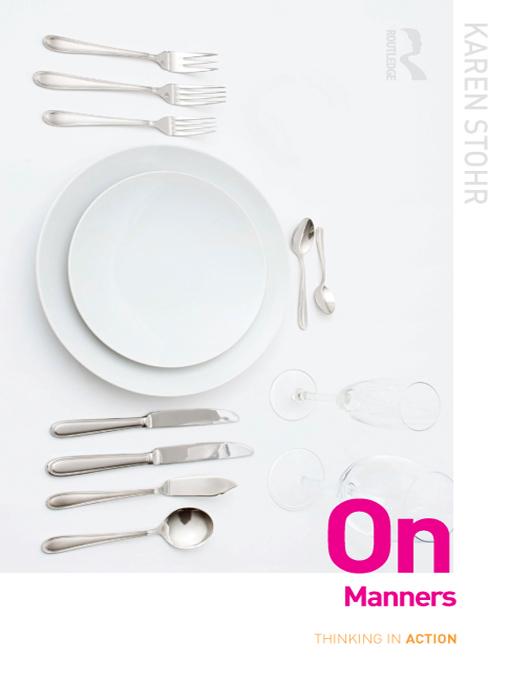
Many otherwise enlightened people often dismiss etiquette as a trivial subject or—worse yet—as nothing but a disguise for moral hypocrisy or unjust social hierarchies. Such sentiments either mistakenly assume that most manners merely frame the “real issues” of any interpersonal exchange or are the ugly vestiges of outdated, unfair social arrangements. But in On Manners, Karen Stohr turns the tables on these easy prejudices, demonstrating that the scope of manners is much broader than most people realize and that manners lead directly to the roots of enduring ethical questions. Stohr suggests that though manners are mostly conventional, they are nevertheless authoritative insofar as they are a primary means by which we express moral attitudes and commitments and carry out important moral goals.
Drawing primarily on Aristotle and Kant and with references to a wide range of cultural examples—from Jane Austen’s Pride and Prejudice to Larry David’s Curb Your Enthusiasm—the author ultimately concludes that good manners are essential to moral character.
Payez facilement par carte, Klarna, Apple Pay ou Google Pay. Pas satisfait ? Vous avez toujours une garantie de remboursement de 14 jours. En savoir plus dans nos conditions. Si vous avez des questions, envoyez-nous un e-mail à hello@memmo.org.
Memmo facilite tes études, où que tu sois dans le monde. On rassemble tes manuels de cours et des outils d'étude intelligents au même endroit : résumés, quiz, podcasts et flashcards. Et il y a Ted, ton compagnon d'étude qui répond à toutes tes questions. Plus de 50 000 étudiants étudient déjà ici – conçu pour t'aider à apprendre plus vite et à moins stresser.