
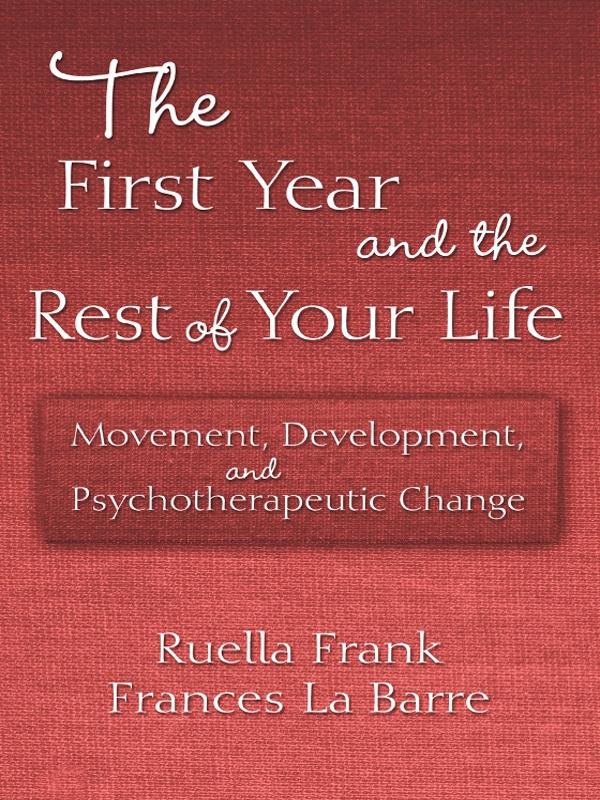
The movement repertoire that develops in the first year of life is a language in itself and conveys desires, intentions, and emotions. This early life in motion serves as the roots of ongoing nonverbal interaction and later verbal expression – in short, this language remains a key element in communication throughout life.
In their path-breaking book, gestalt therapist Ruella Frank and psychoanalyst Frances La Barre give readers the tools to see and understand the logic of this nonverbal realm. They demonstrate how observations of fundamental movement interactions between babies and parents cue us to coconstructed experiences that underlie psychological development. Numerous clinical vignettes and detailed case studies show how movement observation opens the door to understanding problems that develop in infancy and also those that appear in the continuing nonverbal dimension of adult communication.
Their user-friendly nonverbal lexicon – foundational movement analysis – enhances perception of emerging interactive patterns of parents and their babies, couples, and individual adults within psychotherapy. Clinicians in any setting will find this book to be a masterful application of infant research and movement theory that significantly augments clinical acumen and promotes greater understanding of the nonverbal basis of all relationships.
Payez facilement par carte, Klarna, Apple Pay ou Google Pay. Pas satisfait ? Vous avez toujours une garantie de remboursement de 14 jours. En savoir plus dans nos conditions. Si vous avez des questions, envoyez-nous un e-mail à hello@memmo.org.
Memmo facilite tes études, où que tu sois dans le monde. On rassemble tes manuels de cours et des outils d'étude intelligents au même endroit : résumés, quiz, podcasts et flashcards. Et il y a Ted, ton compagnon d'étude qui répond à toutes tes questions. Plus de 50 000 étudiants étudient déjà ici – conçu pour t'aider à apprendre plus vite et à moins stresser.