
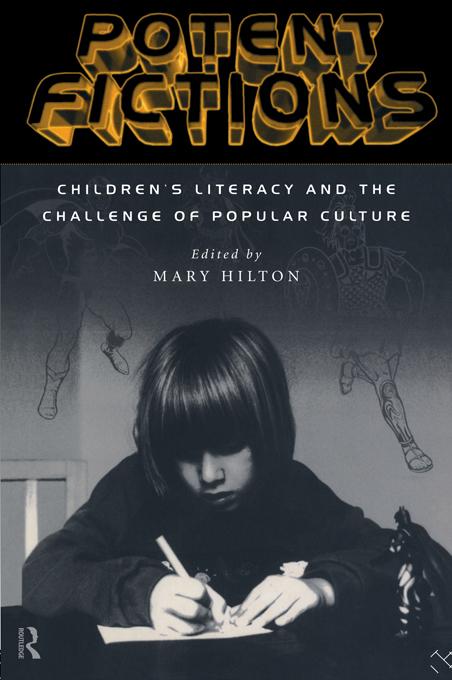
Today's children spend more time than ever before watching television, playing computer games and reading comic and pulp fiction. Many of these are directly designed by the toy and media industry. Are children therefore simply being manipulated?
There is widespread concern that because of these kinds of popular fiction, children do not read `quality' literature, resulting in lower standards of literacy. There is also the further fear that because many of these popular media portray highly stereotyped, gendered images, this too will have a damaging effect on children.
Mary Hilton's fascinating book proves that there is another side to the argument. We do not have to view popular culture as a threat to our children or their education. The writers of this collection show how, used carefully alongside other types of literature, popular culture can actually help teachers to develop literacy in a broad and positive sense.
Payez facilement par carte, Klarna, Apple Pay ou Google Pay. Pas satisfait ? Vous avez toujours une garantie de remboursement de 14 jours. En savoir plus dans nos conditions. Si vous avez des questions, envoyez-nous un e-mail à hello@memmo.org.
Memmo facilite tes études, où que tu sois dans le monde. On rassemble tes manuels de cours et des outils d'étude intelligents au même endroit : résumés, quiz, podcasts et flashcards. Et il y a Ted, ton compagnon d'étude qui répond à toutes tes questions. Plus de 50 000 étudiants étudient déjà ici – conçu pour t'aider à apprendre plus vite et à moins stresser.
Tu pourrais aussi aimer
Acheter le livre0