
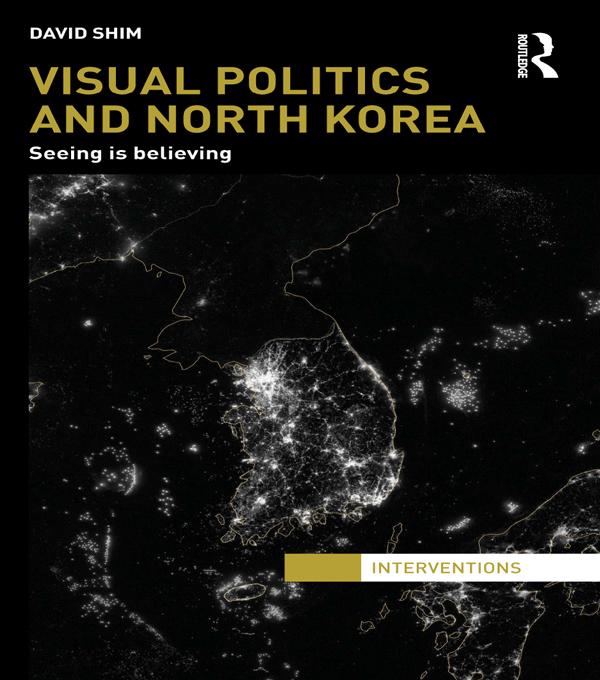
In the realm of international relations, there are seemingly few states like North Korea. Whether it is the country’s human rights situation, its precarious everyday life or its so-called foreign policy of coercion and nuclear brinkmanship, no matter what this ‘pariah’ nation says and does it affects the state and stability of regional and global politics. But what do we know about North Korea and how do we come to know it? This book argues that visual imagery plays a decisive role in this operation. By discussing two exemplary areas – everyday photography and satellite imagery – the book takes into account the role of images in the way that particular issues related to North Korea are understood in contemporary geopolitics. Images work. They do something by evoking a particular perspective of what is shown in them, allowing only specific ways of seeing and knowing. In this sense, images are deeply political. Individual methodological usages in the book can provide a procedural basis from which to start or rethink further studies on visuality, both in IR and beyond. It also opens an innovative path for future studies on East Asia, making the book attractive to a range of specialists and thus holding an appeal beyond the boundaries of a single discipline.
Payez facilement par carte, Klarna, Apple Pay ou Google Pay. Pas satisfait ? Vous avez toujours une garantie de remboursement de 14 jours. En savoir plus dans nos conditions. Si vous avez des questions, envoyez-nous un e-mail à hello@memmo.org.
Memmo facilite tes études, où que tu sois dans le monde. On rassemble tes manuels de cours et des outils d'étude intelligents au même endroit : résumés, quiz, podcasts et flashcards. Et il y a Ted, ton compagnon d'étude qui répond à toutes tes questions. Plus de 50 000 étudiants étudient déjà ici – conçu pour t'aider à apprendre plus vite et à moins stresser.