
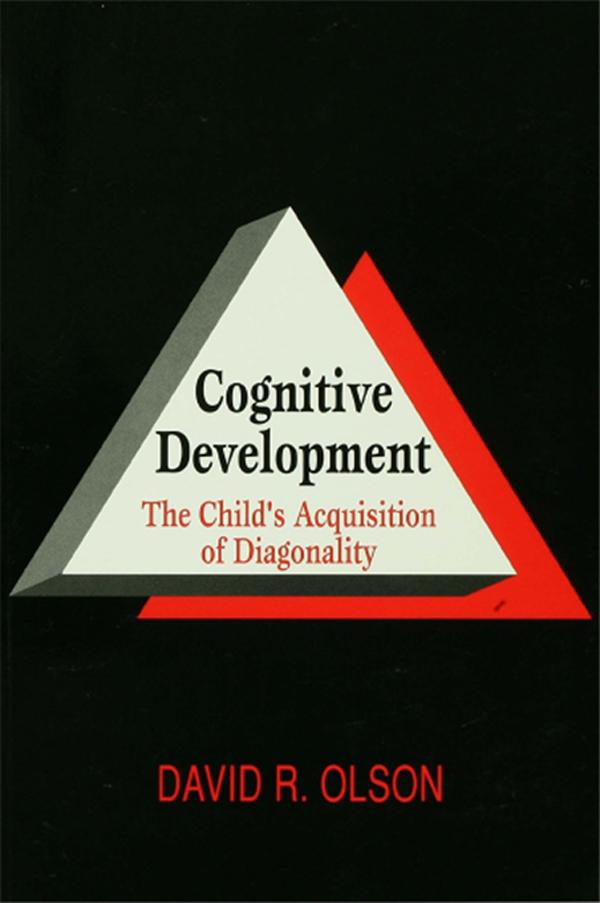
When this book was first published, David Olson was examining the developing representation and use of diagonals in the context of much larger questions, questions also explored by Vygotsky, Cassirer, Gombrich, and Bruner. These include such issues as conceptual development, conceptual change, and stage-like transitions in one's knowledge and belief. Some of these problems remain at virtually the same stage of solution to this day. Other problems have indeed been solved or at least come closer to solution, leading the author to think about the precise cognitive representations that allowed for the cognitive growth he examined in such scrupulous detail.
The author hopes that both readers and re-readers of this volume will be led to wonder -- as he did while working on the book -- just what there is about a simple diagonal that makes its reproduction so difficult. In so doing, readers will again be reminded of the remarkable resources that children bring to bear on their understanding of the world as well as the blind spots that no simple telling can quite fill in.
Payez facilement par carte, Klarna, Apple Pay ou Google Pay. Pas satisfait ? Vous avez toujours une garantie de remboursement de 14 jours. En savoir plus dans nos conditions. Si vous avez des questions, envoyez-nous un e-mail à hello@memmo.org.
Memmo facilite tes études, où que tu sois dans le monde. On rassemble tes manuels de cours et des outils d'étude intelligents au même endroit : résumés, quiz, podcasts et flashcards. Et il y a Ted, ton compagnon d'étude qui répond à toutes tes questions. Plus de 50 000 étudiants étudient déjà ici – conçu pour t'aider à apprendre plus vite et à moins stresser.