
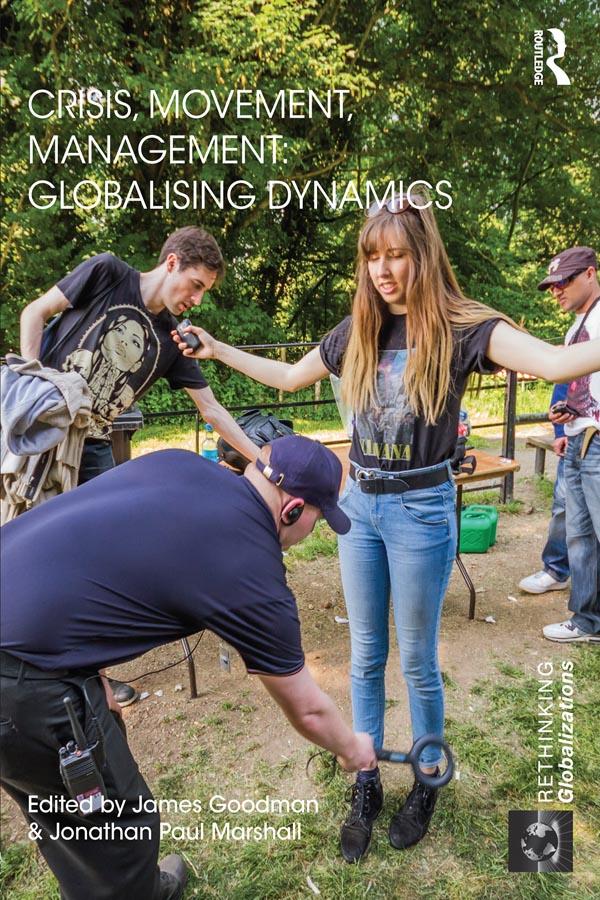
Globalised neo-liberalism has produced multiple crises – social, ecological, political. In the past, crises of global order have generated large-scale social transformations, and the current crises likewise hold a transformative promise. Social movements become a crucial barometer, in signalling both the demise and rise of political formations and programs. Elite strategies, framed as crisis management, create their own disordering side-effects. Experiments in movement strategy gain greater significance, as do contending elite efforts at repressing, managing or displacing the fall-out. In this book we investigate both movements and management in the face of crisis, taking crisis and unanticipated consequences as a normal state-of-play. The book enquires into the winners and losers from crisis, and investigates the movement-management nexus as it unfolds in particular localities as well as in broader contexts.
The book deals with some of the most pressing conflicts of our time, and produces a range of theoretical insights: the ubiquity of crisis is seen as not only a hallmark of social life, but a way into a different kind of social analysis.
This book was published as a special issue of Globalizations.
Payez facilement par carte, Klarna, Apple Pay ou Google Pay. Pas satisfait ? Vous avez toujours une garantie de remboursement de 14 jours. En savoir plus dans nos conditions. Si vous avez des questions, envoyez-nous un e-mail à hello@memmo.org.
Memmo facilite tes études, où que tu sois dans le monde. On rassemble tes manuels de cours et des outils d'étude intelligents au même endroit : résumés, quiz, podcasts et flashcards. Et il y a Ted, ton compagnon d'étude qui répond à toutes tes questions. Plus de 50 000 étudiants étudient déjà ici – conçu pour t'aider à apprendre plus vite et à moins stresser.