
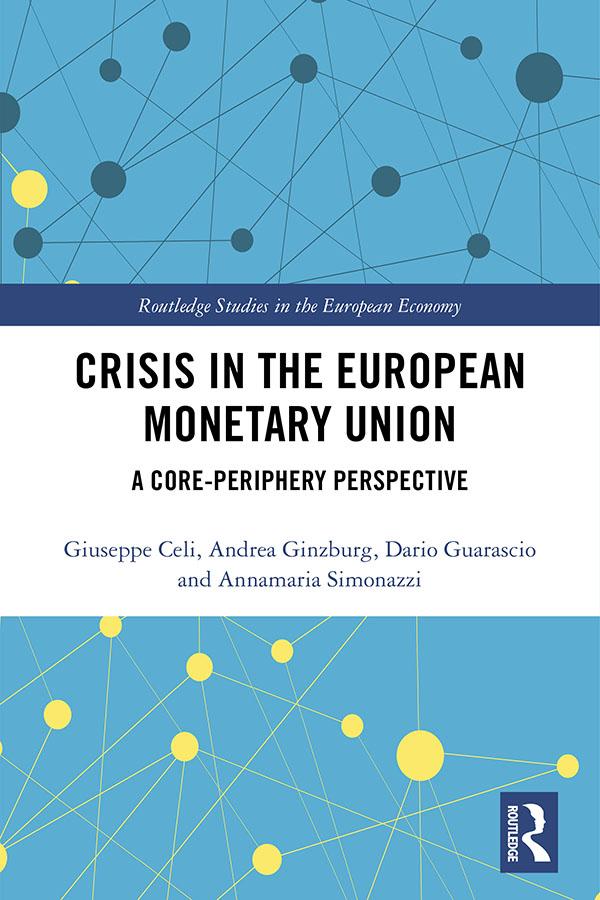
After decades of economic integration and EU enlargement, the economic geography of Europe has shifted, with new peripheries emerging and the core showing signs of fragmentation. This book examines the paths of the core and peripheral countries, with a focus on their diverse productive capabilities and their interdependence.
Crisis in the European Monetary Union: A Core-Periphery Perspective provides a new framework for analysing the economic crisis that has shaken the Eurozone countries. Its analysis goes beyond the short-term, to study the medium and long-term relations between ‘core’ countries (particularly Germany) and Southern European ‘peripheral’ countries. The authors argue that long-term sustainability means assigning the state a key role in guiding investment, which in turn implies industrial policies geared towards diversifying, innovating and strengthening the economic structures of peripheral countries to help them thrive.
Offering a fresh angle on the European crisis, this volume will appeal to students, academics and policymakers interested in the past, present and future construction of Europe.
Payez facilement par carte, Klarna, Apple Pay ou Google Pay. Pas satisfait ? Vous avez toujours une garantie de remboursement de 14 jours. En savoir plus dans nos conditions. Si vous avez des questions, envoyez-nous un e-mail à hello@memmo.org.
Memmo facilite tes études, où que tu sois dans le monde. On rassemble tes manuels de cours et des outils d'étude intelligents au même endroit : résumés, quiz, podcasts et flashcards. Et il y a Ted, ton compagnon d'étude qui répond à toutes tes questions. Plus de 50 000 étudiants étudient déjà ici – conçu pour t'aider à apprendre plus vite et à moins stresser.