
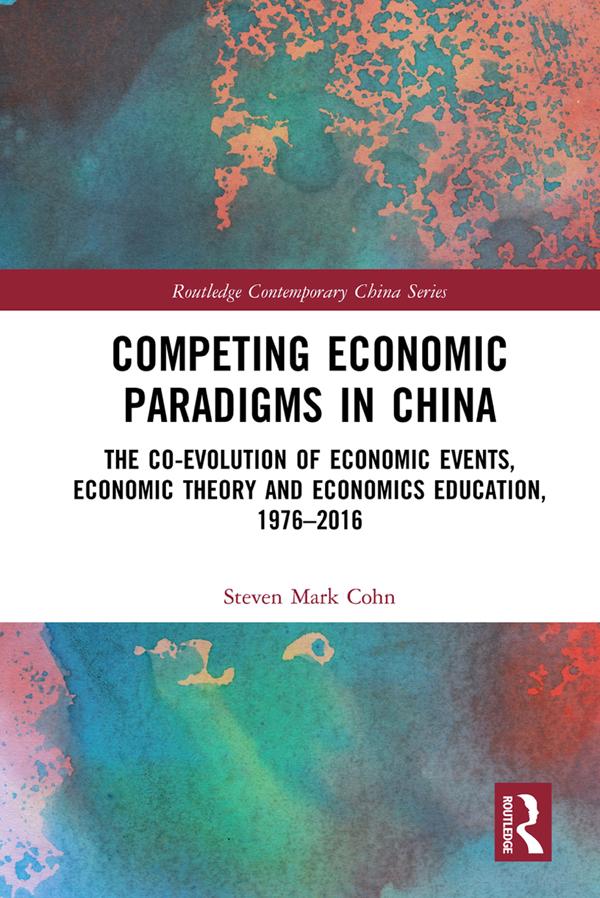
When the Chinese economic reforms began in 1978, Marxist economics infused all the institutions of economic theory in China, from academic departments and economics journals to government departments and economic think tanks. By the year 2000, neoclassical economics dominated these institutions and organized most economic discussion. This book explains how and why neoclassical economic theory replaced Marxist economic theory as the dominant economics paradigm in China. It rejects the idea that the rise of neoclassical theory was a triumph of reason over ideology, and instead, using a sociology of knowledge approach, links the rise of neoclassical economics to broad ideological currents and to the political-economic projects that key social groups inside and outside China wanted to enable. The book concludes with a discussion of the nature of economic theory and economics education in China today.
Payez facilement par carte, Klarna, Apple Pay ou Google Pay. Pas satisfait ? Vous avez toujours une garantie de remboursement de 14 jours. En savoir plus dans nos conditions. Si vous avez des questions, envoyez-nous un e-mail à hello@memmo.org.
Memmo facilite tes études, où que tu sois dans le monde. On rassemble tes manuels de cours et des outils d'étude intelligents au même endroit : résumés, quiz, podcasts et flashcards. Et il y a Ted, ton compagnon d'étude qui répond à toutes tes questions. Plus de 50 000 étudiants étudient déjà ici – conçu pour t'aider à apprendre plus vite et à moins stresser.
Tu pourrais aussi aimer
Acheter le livre0