
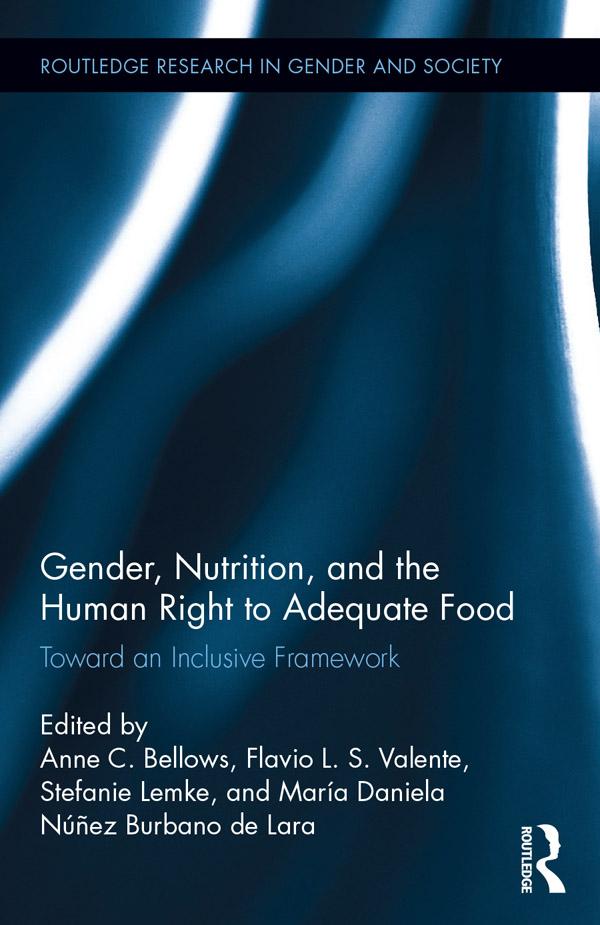
This book introduces the human right to adequate food and nutrition as evolving concept and identifies two structural "disconnects" fueling food insecurity for a billion people, and disproportionally affecting women, children, and rural food producers: the separation of women’s rights from their right to adequate food and nutrition, and the fragmented attention to food as commodity and the medicalization of nutritional health. Three conditions arising from these disconnects are discussed: structural violence and discrimination frustrating the realization of women’s human rights, as well as their private and public contributions to food and nutrition security for all; many women’s experience of their and their children’s simultaneously independent and intertwined subjectivities during pregnancy and breastfeeding being poorly understood in human rights law and abused by poorly-regulated food and nutrition industry marketing practices; and the neoliberal economic system’s interference both with the autonomy and self-determination of women and their communities and with the strengthening of sustainable diets based on democratically governed local food systems. The book calls for a social movement-led reconceptualization of the right to adequate food toward incorporating gender, women’s rights, and nutrition, based on the food sovereignty framework.
Payez facilement par carte, Klarna, Apple Pay ou Google Pay. Pas satisfait ? Vous avez toujours une garantie de remboursement de 14 jours. En savoir plus dans nos conditions. Si vous avez des questions, envoyez-nous un e-mail à hello@memmo.org.
Memmo facilite tes études, où que tu sois dans le monde. On rassemble tes manuels de cours et des outils d'étude intelligents au même endroit : résumés, quiz, podcasts et flashcards. Et il y a Ted, ton compagnon d'étude qui répond à toutes tes questions. Plus de 50 000 étudiants étudient déjà ici – conçu pour t'aider à apprendre plus vite et à moins stresser.