
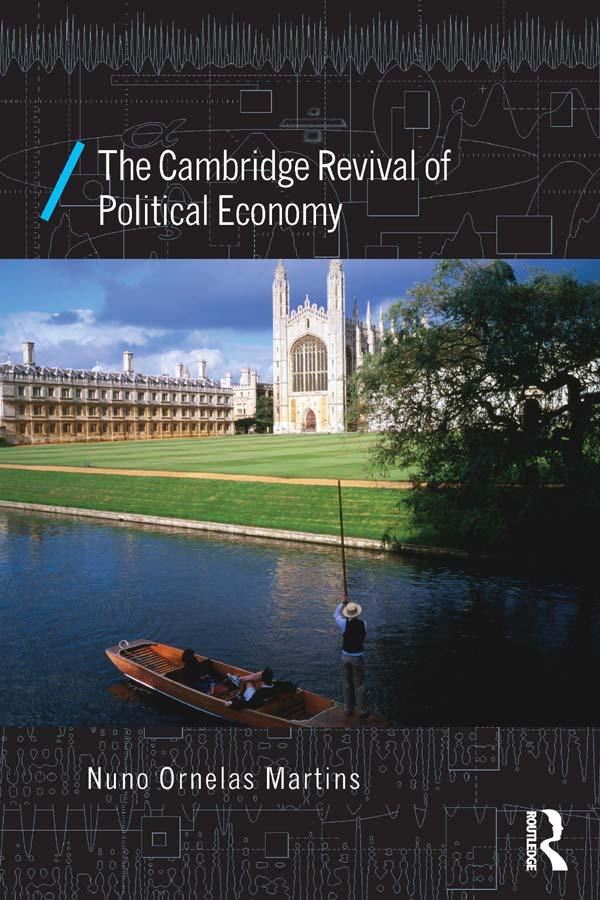
The marginalist revolution of the late nineteenth century consolidated what Karl Marx and Piero Sraffa called ‘vulgar economy’, bringing with it an emphasis on a scarcity theory that replaced the classical surplus theory. However, the classical political economy of Adam Smith and David Ricardo has been revived within the Cambridge economic tradition. This book looks at how different branches of the Cambridge economic tradition have focused on various aspects of this revival over time.
The author shows that classical political economy is distinct from vulgar political economy in terms of its economic, social, and ethical theory, with each difference resting on an issue of ontology. Structured in three parts, the book examines the central contested aspects of these theories, namely the nature of value, the relationship between human beings and social structure, and the nature of human wellbeing.
The Cambridge Revival of Political Economy will be relevant to students and researchers within the fields of political economy, history of economic thought, politics and philosophy.
Payez facilement par carte, Klarna, Apple Pay ou Google Pay. Pas satisfait ? Vous avez toujours une garantie de remboursement de 14 jours. En savoir plus dans nos conditions. Si vous avez des questions, envoyez-nous un e-mail à hello@memmo.org.
Memmo facilite tes études, où que tu sois dans le monde. On rassemble tes manuels de cours et des outils d'étude intelligents au même endroit : résumés, quiz, podcasts et flashcards. Et il y a Ted, ton compagnon d'étude qui répond à toutes tes questions. Plus de 50 000 étudiants étudient déjà ici – conçu pour t'aider à apprendre plus vite et à moins stresser.