
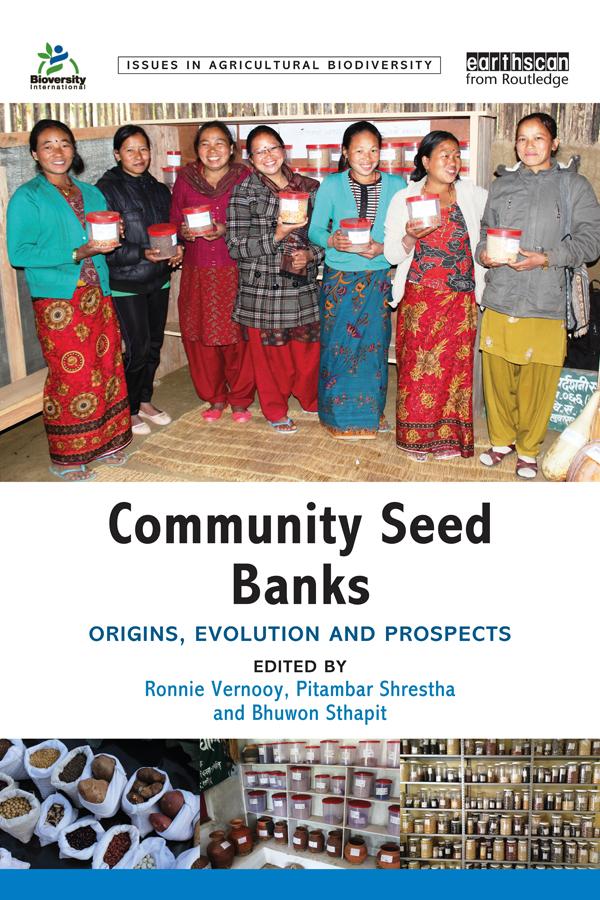
Community seed banks first appeared towards the end of the 1980s, established with the support of international and national non-governmental organizations. This book is the first to provide a global review of their development and includes a wide range of case studies.
Countries that pioneered various types of community seed banks include Bangladesh, Brazil, Ethiopia, India, Nepal, Nicaragua, the Philippines and Zimbabwe. In the North, a particular type of community seed bank emerged known as a seed-savers network. Such networks were first established in Australia, Canada, the UK and the USA before spreading to other countries. Over time, the number and diversity of seed banks has grown. In Nepal, for example, there are now more than 100 self-described community seed banks whose functions range from pure conservation to commercial seed production. In Brazil, community seed banks operate in various regions of the country.
Surprisingly, despite 25 years of history and the rapid growth in number, organizational diversity and geographical coverage of community seed banks, recognition of their roles and contributions has remained scanty. The book reviews their history, evolution, experiences, successes and failures (and reasons why), challenges and prospects. It fills a significant gap in the literature on agricultural biodiversity and conservation, and their contribution to food sovereignty and security.
Payez facilement par carte, Klarna, Apple Pay ou Google Pay. Pas satisfait ? Vous avez toujours une garantie de remboursement de 14 jours. En savoir plus dans nos conditions. Si vous avez des questions, envoyez-nous un e-mail à hello@memmo.org.
Memmo facilite tes études, où que tu sois dans le monde. On rassemble tes manuels de cours et des outils d'étude intelligents au même endroit : résumés, quiz, podcasts et flashcards. Et il y a Ted, ton compagnon d'étude qui répond à toutes tes questions. Plus de 50 000 étudiants étudient déjà ici – conçu pour t'aider à apprendre plus vite et à moins stresser.