
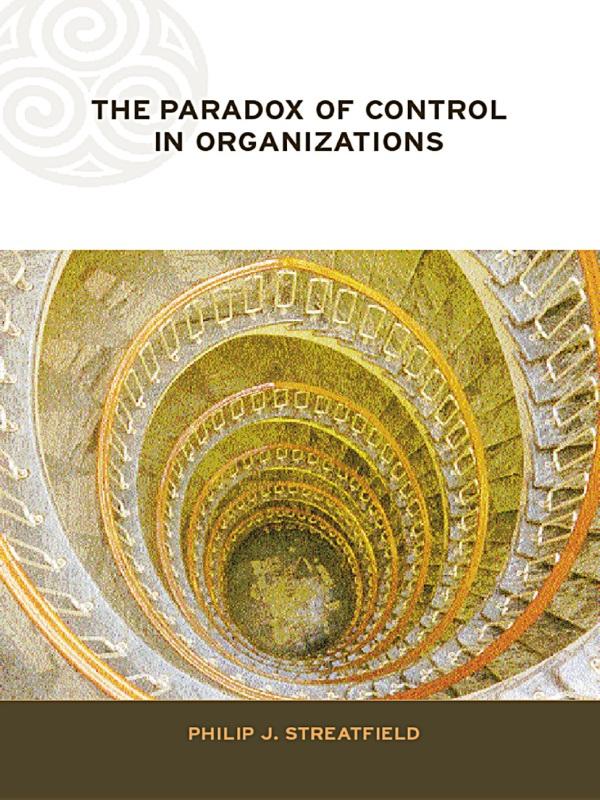
Business leaders are expected to be 'in control' of the situation in which their businesses find themselves. But how can organizational leaders and managers control matters entirely out of their hands; such as the next action a competitor takes, or the next law a government may pass? In this book, Philip Streatfield reflects on his own experience as a manager to explore the question: who, or what is 'in control' in an organization?
Adopting the perspective of complex responsive processes developed in the first two volumes of this series, the author takes self-organization and emergence as central themes in thinking about life in organizations. He focuses on the tension between spontaneously forming patterns of conversation and intentional actions arguing that the order of organizations emerges through a combination of collective interaction and individual intentions. The argument is developed by considering the day-to-day experiences of life in a large pharmaceutical organization, SmithKline Beecham.
In today's organization, managers find that they have to live with the paradox of being 'in control' and 'not in control' simultaneously. It is this capacity to live with paradox, and to continue to participate creatively in spite of 'not being in control', that constitutes effective management.
Payez facilement par carte, Klarna, Apple Pay ou Google Pay. Pas satisfait ? Vous avez toujours une garantie de remboursement de 14 jours. En savoir plus dans nos conditions. Si vous avez des questions, envoyez-nous un e-mail à hello@memmo.org.
Memmo facilite tes études, où que tu sois dans le monde. On rassemble tes manuels de cours et des outils d'étude intelligents au même endroit : résumés, quiz, podcasts et flashcards. Et il y a Ted, ton compagnon d'étude qui répond à toutes tes questions. Plus de 50 000 étudiants étudient déjà ici – conçu pour t'aider à apprendre plus vite et à moins stresser.