
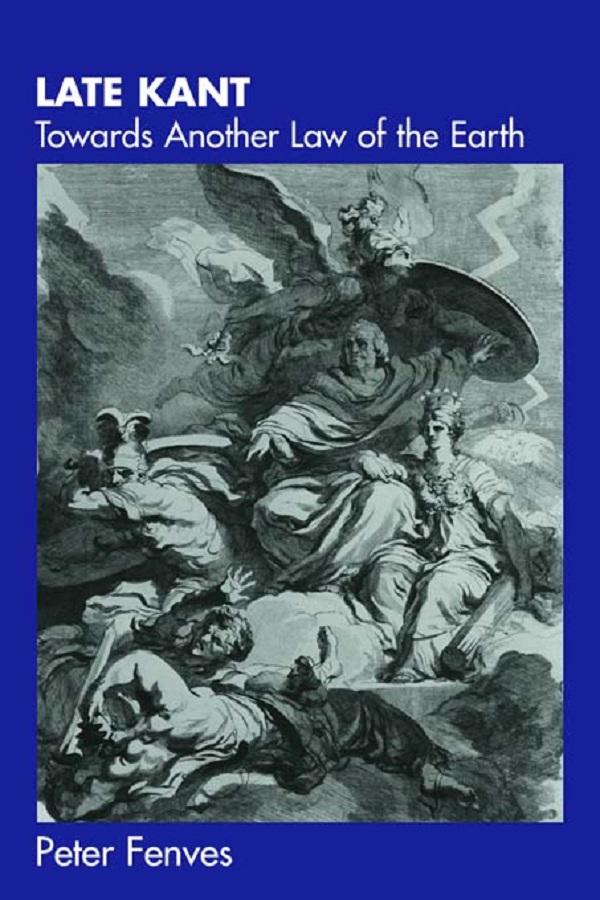
Immanuel Kant spent many of his younger years working on what are generally considered his masterpieces: the three Critiques. But his work did not stop there: in later life he began to reconsider subjects such as anthropology, and topics including colonialism, race and peace.
In Late Kant, Peter Fenves becomes one of the first to thoroughly explore Kant's later writings and give them the detailed scholarly attention they deserve. In his opening chapters, Fenves examines in detail the various essays in which Kant invents, formulates and complicates the thesis of 'radical evil' - a thesis which serves as the point of departure for all his later writings. Late Kant then turns towards the counter-thesis of 'radical mean-ness', which states that human beings exist on earth for the sake of another species or race of human beings. The consequences of this startling thesis are that human beings cannot claim possession of the earth, but must rather prepare the earth for its rightful owners.
Late Kant is the first book to develop the 'geo-ethics' of Kant's thought, and the idea that human beings must be prepared to concede their space for another kind of human. It is essential reading for anyone interested in the later works of Immanuel Kant.
Payez facilement par carte, Klarna, Apple Pay ou Google Pay. Pas satisfait ? Vous avez toujours une garantie de remboursement de 14 jours. En savoir plus dans nos conditions. Si vous avez des questions, envoyez-nous un e-mail à hello@memmo.org.
Memmo facilite tes études, où que tu sois dans le monde. On rassemble tes manuels de cours et des outils d'étude intelligents au même endroit : résumés, quiz, podcasts et flashcards. Et il y a Ted, ton compagnon d'étude qui répond à toutes tes questions. Plus de 50 000 étudiants étudient déjà ici – conçu pour t'aider à apprendre plus vite et à moins stresser.