
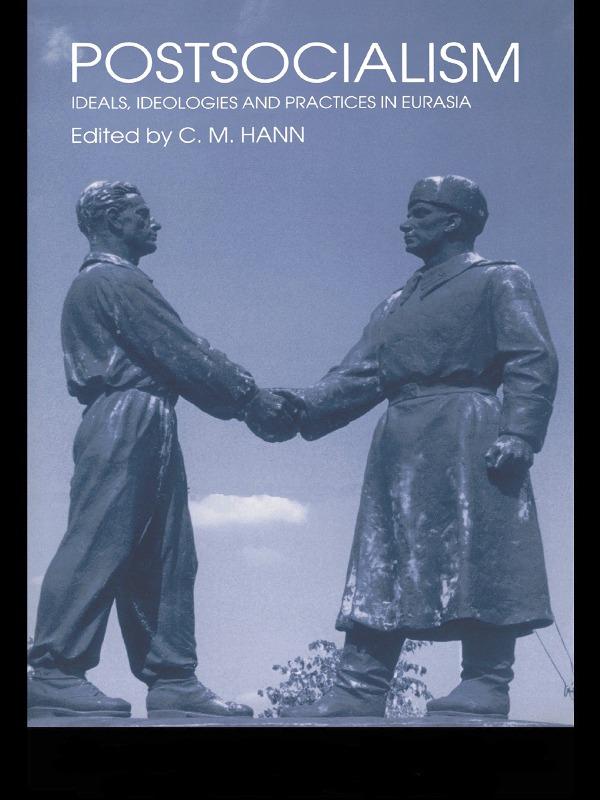
Social scientists did not predict the collapse of the socialist system in 1989-91 and their attempts to explain postsocialism have not been comprehensive. Economic disintegration and political instability have been documented, but the deeper causes have often gone unnoticed. Consequently the solutions proffered, such as the promotion of non-governmental organisations as the foundations of 'civil society', have so far brought little success.
Postsocialism presents, for the first time, the anthropological responses to these problems which are all grounded in intensive fieldwork. The authors demonstrate that even when local conditions are specific, the view 'from below' illuminates macro trends. A wide range of topics are discussed, including:
*the role of social and cultural capital in determining the 'winners' of rural decollectivization
*the devaluation of blue collar labour
*the position of Gypsies
*the viability of 'multicultural' models in situations of religious differences and ethnic violence
*new patterns of consumption in China
*the revival of rituals and the healing of socialist 'trauma'. _
Payez facilement par carte, Klarna, Apple Pay ou Google Pay. Pas satisfait ? Vous avez toujours une garantie de remboursement de 14 jours. En savoir plus dans nos conditions. Si vous avez des questions, envoyez-nous un e-mail à hello@memmo.org.
Memmo facilite tes études, où que tu sois dans le monde. On rassemble tes manuels de cours et des outils d'étude intelligents au même endroit : résumés, quiz, podcasts et flashcards. Et il y a Ted, ton compagnon d'étude qui répond à toutes tes questions. Plus de 50 000 étudiants étudient déjà ici – conçu pour t'aider à apprendre plus vite et à moins stresser.