
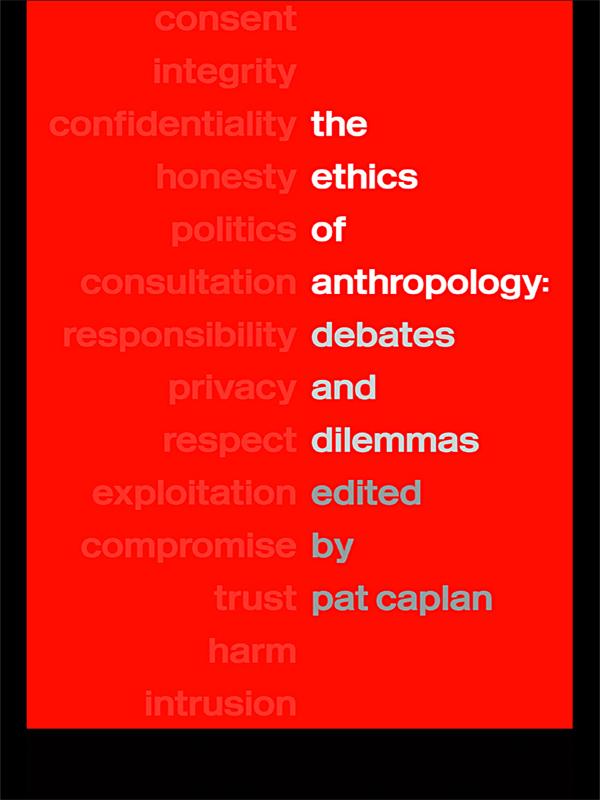
Since the inception of their discipline, anthropologists have studied virtually every conceivable aspect of other peoples' morality - religion, social control, sin, virtue, evil, duty, purity and pollution. But what of the examination of anthropology itself, and of its agendas, epistemes, theories and praxes? In 1991, Raymond Firth spoke of social anthropology as an essentially moral discipline. Is such a view outmoded in a postmodern era? Do anthropological ethics have to be re-thought each generation as the conditions of the discipline change, and as choices collide with moral alternatives? The Ethics of Anthropology looks at some of these crucial issues as they reflect on researcher relations, privacy, authority, secrecy and ownership of knowledge. The book combines theoretical papers and case studies from eminent scholars including Lisette Josephides, Steven Nugent, Marilyn Silverman, Andrew Spiegel and Veronica Strang. Showing how the topic of ethics goes to the heart of anthropology, it raises the controversial question of why - and for whom - the anthropological discipline functions.
Payez facilement par carte, Klarna, Apple Pay ou Google Pay. Pas satisfait ? Vous avez toujours une garantie de remboursement de 14 jours. En savoir plus dans nos conditions. Si vous avez des questions, envoyez-nous un e-mail à hello@memmo.org.
Memmo facilite tes études, où que tu sois dans le monde. On rassemble tes manuels de cours et des outils d'étude intelligents au même endroit : résumés, quiz, podcasts et flashcards. Et il y a Ted, ton compagnon d'étude qui répond à toutes tes questions. Plus de 50 000 étudiants étudient déjà ici – conçu pour t'aider à apprendre plus vite et à moins stresser.