
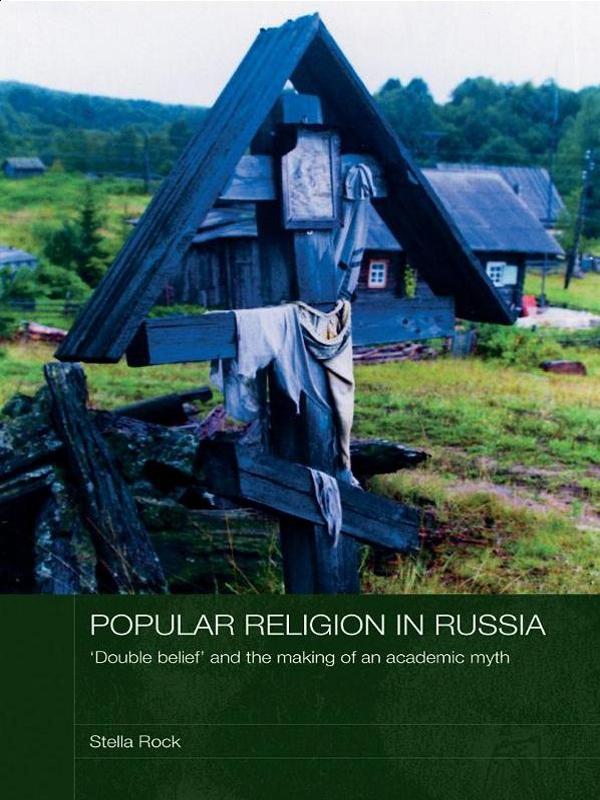
This book dispels the widely-held view that paganism survived in Russia alongside Orthodox Christianity, demonstrating that 'double belief', dvoeverie, is in fact an academic myth.
Scholars, citing the medieval origins of the term, have often portrayed Russian Christianity as uniquely muddied by paganism, with 'double-believing' Christians consciously or unconsciously preserving pagan traditions even into the twentieth century. This volume shows how the concept of dvoeverie arose with nineteenth-century scholars obsessed with the Russian 'folk' and was perpetuated as a propaganda tool in the Soviet period, colouring our perception of both popular faith in Russian and medieval Russian culture for over a century. It surveys the wide variety of uses of the term from the eleventh to the seventeenth century, and contrasts them to its use in modern historiography, concluding that our modern interpretation of dvoeverie would not have been recognized by medieval clerics, and that 'double-belief' is a modern academic construct. Furthermore, it offers a brief foray into medieval Orthodoxy via the mind of the believer, through the language and literature of the period.
Payez facilement par carte, Klarna, Apple Pay ou Google Pay. Pas satisfait ? Vous avez toujours une garantie de remboursement de 14 jours. En savoir plus dans nos conditions. Si vous avez des questions, envoyez-nous un e-mail à hello@memmo.org.
Memmo facilite tes études, où que tu sois dans le monde. On rassemble tes manuels de cours et des outils d'étude intelligents au même endroit : résumés, quiz, podcasts et flashcards. Et il y a Ted, ton compagnon d'étude qui répond à toutes tes questions. Plus de 50 000 étudiants étudient déjà ici – conçu pour t'aider à apprendre plus vite et à moins stresser.