
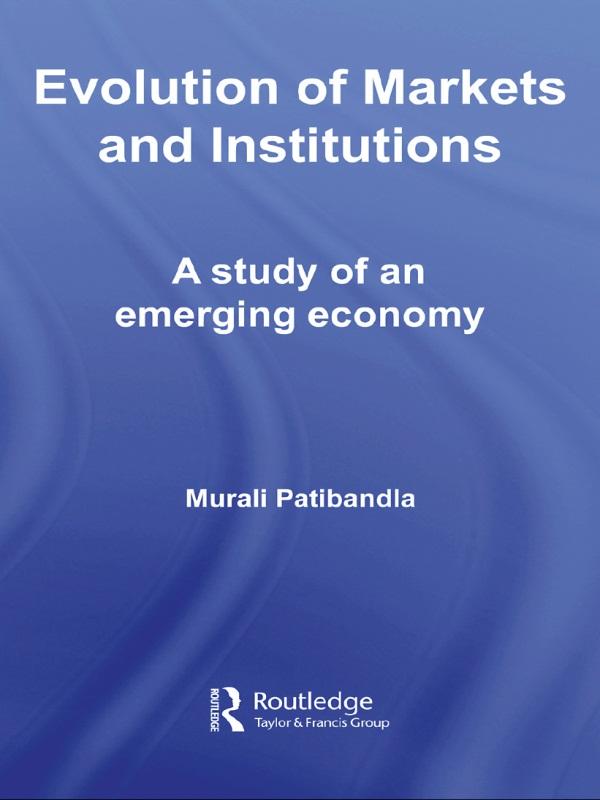
The new institutional economics has been one of the most influential schools of thought to emerge in the past quarter century. Taking its roots in the transaction cost theory of the firm as an economic organization rather than purely a production function, it has been developed further by scholars such as Oliver Williamson, Douglas North and their followers, leading to the rich and growing field of the new institutional economics.
This branch of economics stresses the importance of institutions in the functioning of free markets, which include elaborately defined and effectively enforced property rights in the presence of transaction costs, large corporate organizations with agency and hierarchical controls, formal contracts, bankruptcy laws, and regulatory institutions. In this timely volume, Murali Patibandla applies some of the precepts of the new institutional economics to India - one of the world's most promising economies.
Payez facilement par carte, Klarna, Apple Pay ou Google Pay. Pas satisfait ? Vous avez toujours une garantie de remboursement de 14 jours. En savoir plus dans nos conditions. Si vous avez des questions, envoyez-nous un e-mail à hello@memmo.org.
Memmo facilite tes études, où que tu sois dans le monde. On rassemble tes manuels de cours et des outils d'étude intelligents au même endroit : résumés, quiz, podcasts et flashcards. Et il y a Ted, ton compagnon d'étude qui répond à toutes tes questions. Plus de 50 000 étudiants étudient déjà ici – conçu pour t'aider à apprendre plus vite et à moins stresser.