
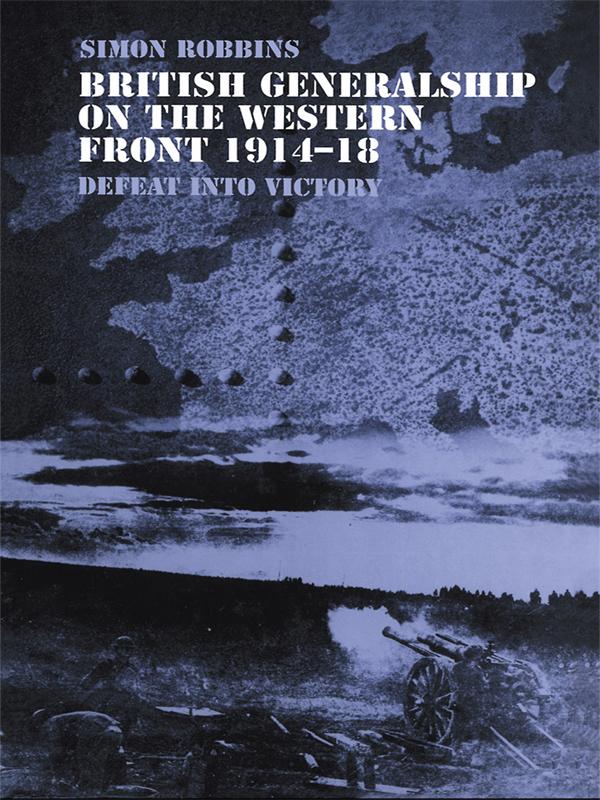
This book explores the British Army's response on the Western Front to a period of seminal change in warfare. In particular it examines the impact of the pre-war emphasis on worldwide garrison, occupation and policing duties for the Empire's defence of the mindset of the Army's leadership and its lack of preparation for a continental war involving a massive, unplanned increase in men and material.
The reasons for the poor performance in the early years of the war, notably professionalism within the British Army, including poor staff work, 'trade unionism', careerism within the high command, and the tendency of an overconfident hierarchy to ignore the need for reform to tackle the tactical stalemate prior to 1916, are analysed. The high command rapidly learnt from the defeats of 1915-16 and performed much better in 1916-18, an especially formative period resulting in the promotion of a younger, more professional leadership and the development of the first truly modern system of tactics which has dominated wars ever since.
During 1917-18 the Army's commanders and staff evolved and improved these new methods; developing a doctrine of combined arms to overcome the tactical stalemate bedevilling Allied offensives.
Payez facilement par carte, Klarna, Apple Pay ou Google Pay. Pas satisfait ? Vous avez toujours une garantie de remboursement de 14 jours. En savoir plus dans nos conditions. Si vous avez des questions, envoyez-nous un e-mail à hello@memmo.org.
Memmo facilite tes études, où que tu sois dans le monde. On rassemble tes manuels de cours et des outils d'étude intelligents au même endroit : résumés, quiz, podcasts et flashcards. Et il y a Ted, ton compagnon d'étude qui répond à toutes tes questions. Plus de 50 000 étudiants étudient déjà ici – conçu pour t'aider à apprendre plus vite et à moins stresser.
Tu pourrais aussi aimer
Acheter le livre0