
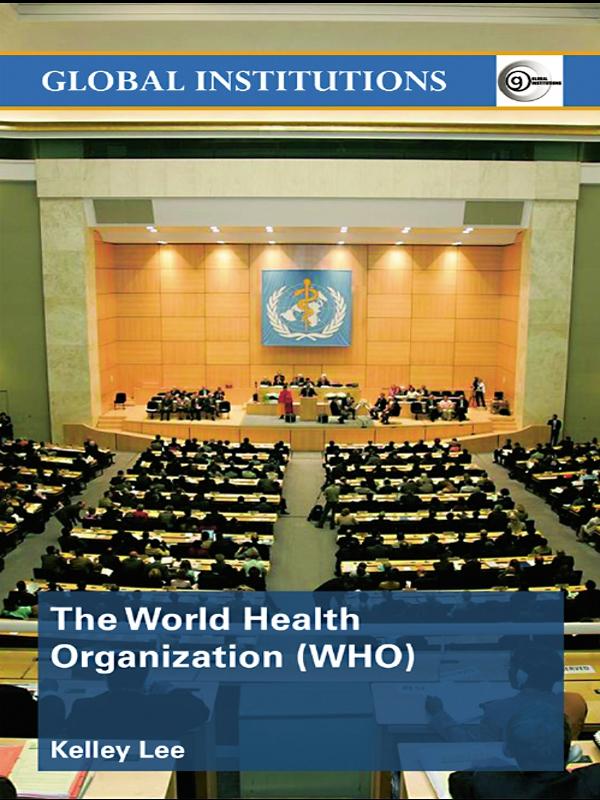
The World Health Organization (WHO), as the United Nations specialized agency for health, has been at the centre of international health cooperation for over sixty years. With origins dating from the nineteenth century, WHO’s mandate is the attainment by all people of the highest possible level of health. The huge challenge of fulfilling this objective has not only required high-level technical skills, but has led the organization to engage with a broad range of political and economic interests. WHO has enjoyed many high-profile successes such as the global eradication of smallpox and SARS, and ongoing campaigns against polio and other diseases. On other issues, such as essential drugs, tobacco control and diet and nutrition, efforts to tackle the broader determinants of health has brought the organization into contact with issues such as globalization, poverty, social justice and human rights.
Kelley Lee analyzes the WHO’s role in international cooperation, examining its changing structures, key programmes and individuals. Of particular focus are the challenges WHO has faced in recent years given the emergence of other global health initiatives and how WHO has sought to remain effective as the "world’s health conscience" within an increasingly complex global context.
Payez facilement par carte, Klarna, Apple Pay ou Google Pay. Pas satisfait ? Vous avez toujours une garantie de remboursement de 14 jours. En savoir plus dans nos conditions. Si vous avez des questions, envoyez-nous un e-mail à hello@memmo.org.
Memmo facilite tes études, où que tu sois dans le monde. On rassemble tes manuels de cours et des outils d'étude intelligents au même endroit : résumés, quiz, podcasts et flashcards. Et il y a Ted, ton compagnon d'étude qui répond à toutes tes questions. Plus de 50 000 étudiants étudient déjà ici – conçu pour t'aider à apprendre plus vite et à moins stresser.