
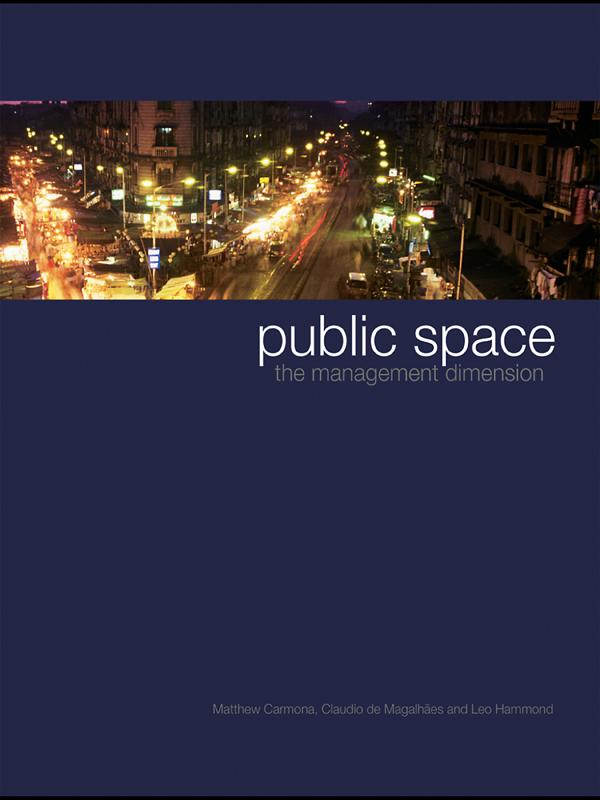
In both the UK and the US there is a sense of dissatisfaction and pessimism about the state of urban environments, particularly with the quality of everyday public spaces. Explanations for this have emphasized the poor quality of design that characterizes many new public spaces; spaces that are dominated by parking, roads infrastructure, introspective buildings, a lack of enclosure and a poor sense of place, and which in different ways for different groups are too often exclusionary.
Yet many well designed public spaces have also experienced decline and neglect, as the services and activities upon which the continuing quality of those spaces have been subject to the same constraints and pressures for change as public services in general. These issues touch upon the daily management of public space, that is, the coordination of the many different activities that constantly define and redefine the characteristics and quality of public space.
This book draws on three empirical projects to examine the questions of public space management on an international stage. They are set within a context of theoretical debates about public space, its history, contemporary patterns of use and changing nature in western society, and about the new management approaches that are increasingly being adopted.
Payez facilement par carte, Klarna, Apple Pay ou Google Pay. Pas satisfait ? Vous avez toujours une garantie de remboursement de 14 jours. En savoir plus dans nos conditions. Si vous avez des questions, envoyez-nous un e-mail à hello@memmo.org.
Memmo facilite tes études, où que tu sois dans le monde. On rassemble tes manuels de cours et des outils d'étude intelligents au même endroit : résumés, quiz, podcasts et flashcards. Et il y a Ted, ton compagnon d'étude qui répond à toutes tes questions. Plus de 50 000 étudiants étudient déjà ici – conçu pour t'aider à apprendre plus vite et à moins stresser.