
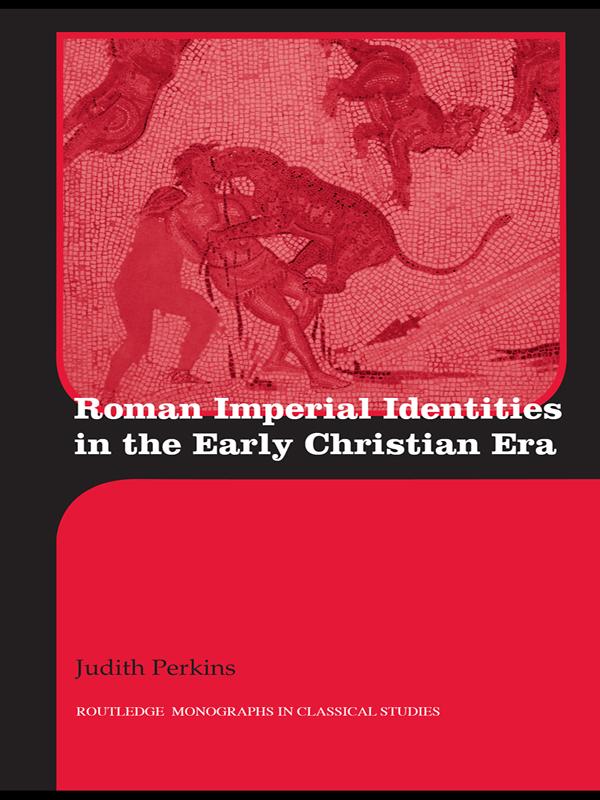
Through the close study of texts, Roman Imperial Identities in the Early Christian Era examines the overlapping emphases and themes of two cosmopolitan and multiethnic cultural identities emerging in the early centuries CE – a trans-empire alliance of the Elite and the "Christians." Exploring the cultural representations of these social identities, Judith Perkins shows that they converge around an array of shared themes: violence, the body, prisons, courts, and time.
Locating Christian representations within their historical context and in dialogue with other contemporary representations, it asks why do Christian representations share certain emphases? To what do they respond, and to whom might they appeal? For example, does the increasing Christian emphasis on a fully material human resurrection in the early centuries, respond to the evolution of a harsher and more status based judicial system?
Judith Perkins argues that Christians were so successful in suppressing their social identity as inhabitants of the Roman Empire, that historical documents and testimony have been sequestered as "Christian" rather than recognized as evidence for the social dynamics enacted during the period, Her discussion offers a stimulating survey of interest to students of ancient narrative, cultural studies and gender.
Payez facilement par carte, Klarna, Apple Pay ou Google Pay. Pas satisfait ? Vous avez toujours une garantie de remboursement de 14 jours. En savoir plus dans nos conditions. Si vous avez des questions, envoyez-nous un e-mail à hello@memmo.org.
Memmo facilite tes études, où que tu sois dans le monde. On rassemble tes manuels de cours et des outils d'étude intelligents au même endroit : résumés, quiz, podcasts et flashcards. Et il y a Ted, ton compagnon d'étude qui répond à toutes tes questions. Plus de 50 000 étudiants étudient déjà ici – conçu pour t'aider à apprendre plus vite et à moins stresser.