
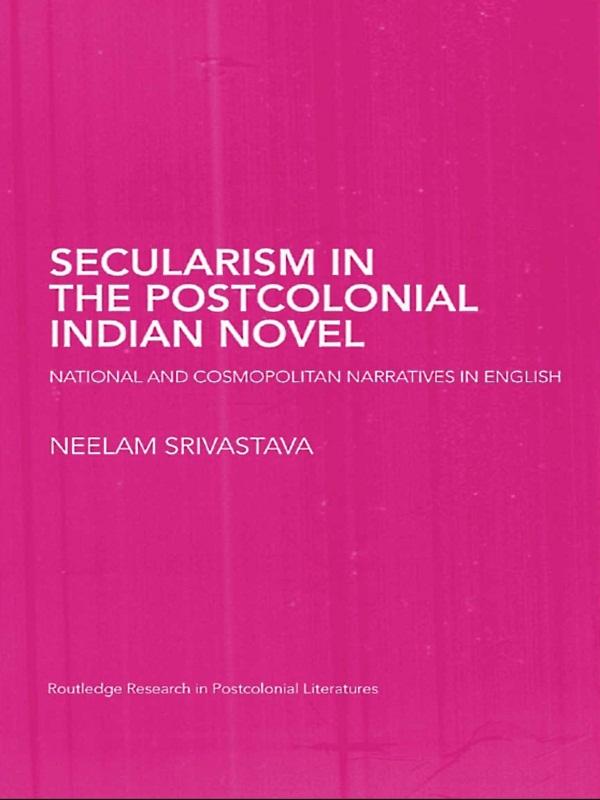
This study explores the connections between a secular Indian nation and fiction in English by a number of postcolonial Indian writers of the 1980s and 90s. Examining writers such as Vikram Seth, Salman Rushdie, Amitav Ghosh, Shashi Tharoor, and Rohinton Mistry, with particularly close readings of Midnight‘s Children, A Suitable Boy, The Shadow Lines and The Satanic Verses, Neelam Srivastava investigates different aspects of postcolonial identity within the secular framework of the Anglophone novel. The book traces the breakdown of the Nehruvian secular consensus between 1975 and 2005 through these narratives of postcolonial India. In particular, it examines how these writers use the novel form to re-write colonial and nationalist versions of Indian history, and how they radically reinvent English as a secular language for narrating India. Ultimately, it delineates a common conceptual framework for secularism and cosmopolitanism, by arguing that Indian secularism can be seen as a located, indigenous form of a cosmopolitan identity.
Payez facilement par carte, Klarna, Apple Pay ou Google Pay. Pas satisfait ? Vous avez toujours une garantie de remboursement de 14 jours. En savoir plus dans nos conditions. Si vous avez des questions, envoyez-nous un e-mail à hello@memmo.org.
Memmo facilite tes études, où que tu sois dans le monde. On rassemble tes manuels de cours et des outils d'étude intelligents au même endroit : résumés, quiz, podcasts et flashcards. Et il y a Ted, ton compagnon d'étude qui répond à toutes tes questions. Plus de 50 000 étudiants étudient déjà ici – conçu pour t'aider à apprendre plus vite et à moins stresser.
Tu pourrais aussi aimer
Acheter le livre0