
'Should be on the shelf of any academic, student, NGO activist or politician with an interest in aid issues. It should also be required reading for donor agency officials'
Development and Change
'As accessible as it is comprehensive has established itself as a reliable 'watchdog' for anyone interested in this important aspect of international relations'
ORBIT
Despite commitments to eradicate poverty, 21 of the world's richest nations have slashed their aid to the world's poorest countries to just 0.3% of GNP, its lowest level for more than 20 years. In real terms, aid in 1994 was below the 1990 level, and with several donors planning further cuts it is likely that the aid level will continue to fall.
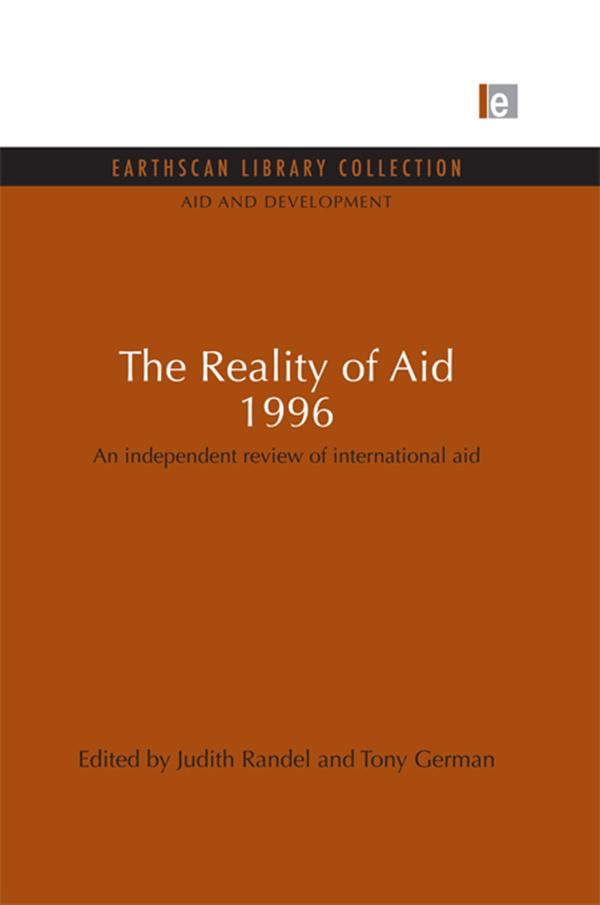
Now in its fourth annual edition, The Reality of Aid critically examines the reality behind the rhetoric of development assistance, and the discrepancy between the targets that the 21 member countries of the OECD Development Assistance Committee are publically committed to and the aid that is actually disbursed. Part 1 of this year's edition includes analyses of;
* the impact of the Copenhagen World Summit for Social Development and '20/20' compact;
* developing countries' debt and their Northern creditors, including banks and international financial institutions;
* efforts to eradicate poverty, a stated aim of development assistance;
* the human and economic cost of the estimated 140 million unexploded landmines currently planted around the world; and
* the impact of conflict and humanitarian need on development cooperation.
In a new section, Part 2 presents perspectives from the South, with contributors from India, Cambodia, Peru, Zimbabwe, Poland and Fiji. Part 3 consists of detailed, country-by-country profiles of the aid performance of the OECD donors; and Part 4 reviews aid spending by Northern governments and NGOs, with 'at a glance' tables and charts which compare donors' performance on issues such as aid to basic health and education, the priority given to poverty reduction, the political management of aid and public attitudes to aid in developed countries. Throughout, information is summarized in easily interpreted figures and graphs.
First produced in 1993, The Reality of Aid has established itself as a unique source of independent evaluation and comment on aid policies and developments. It is indispensable for all involved in development aid, whether in the official or voluntary sectors.
Originally published in 1996
Payez facilement par carte, Klarna, Apple Pay ou Google Pay. Pas satisfait ? Vous avez toujours une garantie de remboursement de 14 jours. En savoir plus dans nos conditions. Si vous avez des questions, envoyez-nous un e-mail à hello@memmo.org.
Memmo facilite tes études, où que tu sois dans le monde. On rassemble tes manuels de cours et des outils d'étude intelligents au même endroit : résumés, quiz, podcasts et flashcards. Et il y a Ted, ton compagnon d'étude qui répond à toutes tes questions. Plus de 50 000 étudiants étudient déjà ici – conçu pour t'aider à apprendre plus vite et à moins stresser.