
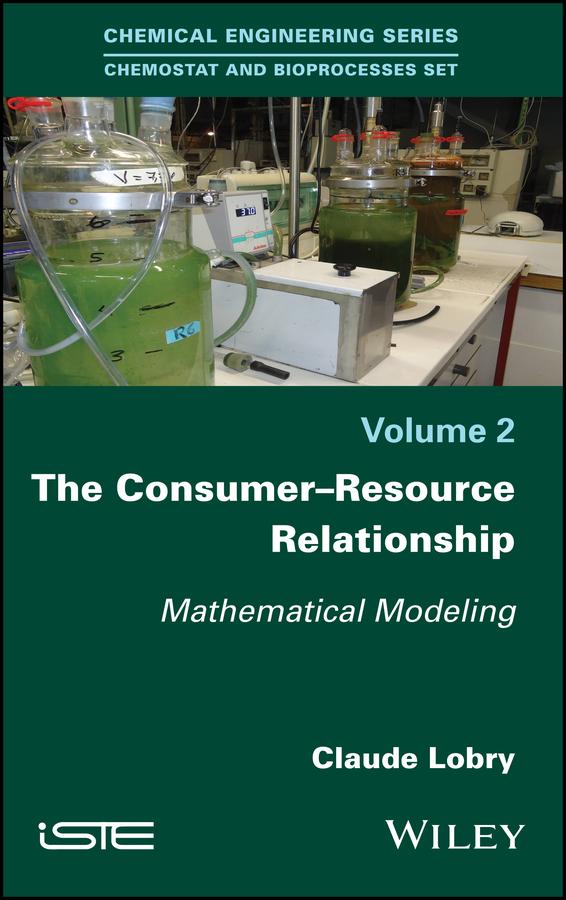
Better known as the "predator-prey relationship," the consumer-resource relationship means the situation where a single species of organisms consumes for survival and reproduction. For example, Escherichia coli consumes glucose, cows consume grass, cheetahs consume baboons; these three very different situations, the first concerns the world of bacteria and the resource is a chemical species, the second concerns mammals and the resource is a plant, and in the final case the consumer and the resource are mammals, have in common the fact of consuming.
In a chemostat, microorganisms generally consume (abiotic) minerals, but not always, bacteriophages consume bacteria that constitute a biotic resource. 'The Chemostat' book dealt only with the case of abiotic resources. Mathematically this amounts to replacing in the two equation system of the chemostat the decreasing function by a general increasing then decreasing function. This simple change has greatly enriched the theory. This book shows in this new framework the problem of competition for the same resource.
Payez facilement par carte, Klarna, Apple Pay ou Google Pay. Pas satisfait ? Vous avez toujours une garantie de remboursement de 14 jours. En savoir plus dans nos conditions. Si vous avez des questions, envoyez-nous un e-mail à hello@memmo.org.
Memmo facilite tes études, où que tu sois dans le monde. On rassemble tes manuels de cours et des outils d'étude intelligents au même endroit : résumés, quiz, podcasts et flashcards. Et il y a Ted, ton compagnon d'étude qui répond à toutes tes questions. Plus de 50 000 étudiants étudient déjà ici – conçu pour t'aider à apprendre plus vite et à moins stresser.