
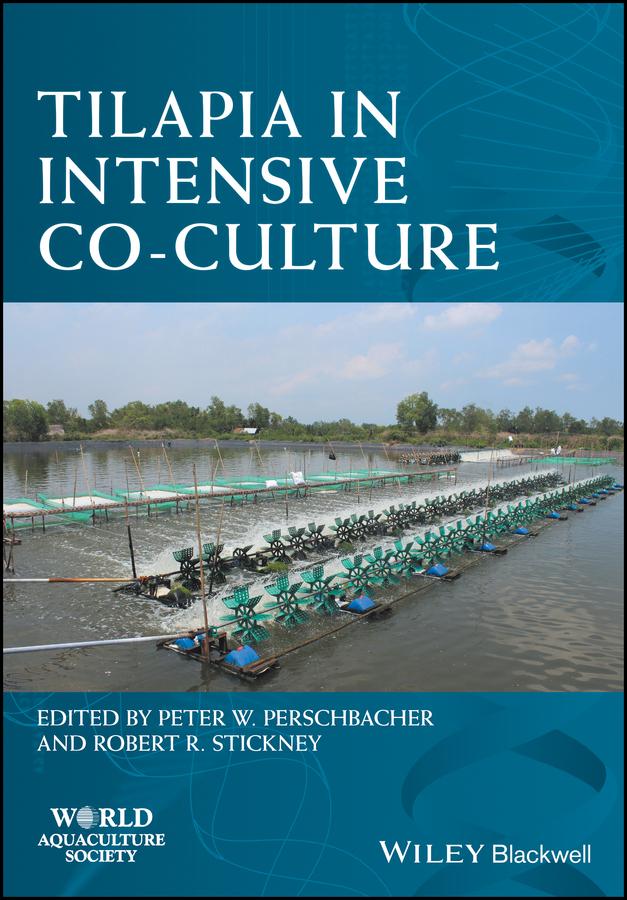
Intensive tilapia co-culture is the commercial production of various species of tilapia in conjunction with one or more other marketable species. Tilapia are attractive as a co-cultured fish because of their potential to improve water quality, especially in penaeid shrimp ponds, by consuming plankton and detritus and by altering pathogenic bacterial populations while increasing marketable production.
Following introductory chapters covering ecological aspects of co-culture, tilapia feeding habits, historical use, and new models, Tilapia in Intensive Co-Culture is divided into co-culture in freshwater and marine environments. Co-culture core information is presented on Vibrio control, high-rate aquaculture processes, aquaponics, tilapia nutrient profile, and tilapia niche economics and marketing in the U.S, and with carp, catfish, freshwater and marine shrimp in the Americas, the Middle East, and Asia.
Tilapia in Intensive Co-Culture is the latest book in the prestigious World Aquaculture Society (WAS) Series, published for WAS by Wiley Blackwell. It will be of great use and interest to researchers, producers, investors and policy makers considering tilapia co-culture in terms of environmental and economic sustainability.
Payez facilement par carte, Klarna, Apple Pay ou Google Pay. Pas satisfait ? Vous avez toujours une garantie de remboursement de 14 jours. En savoir plus dans nos conditions. Si vous avez des questions, envoyez-nous un e-mail à hello@memmo.org.
Memmo facilite tes études, où que tu sois dans le monde. On rassemble tes manuels de cours et des outils d'étude intelligents au même endroit : résumés, quiz, podcasts et flashcards. Et il y a Ted, ton compagnon d'étude qui répond à toutes tes questions. Plus de 50 000 étudiants étudient déjà ici – conçu pour t'aider à apprendre plus vite et à moins stresser.