
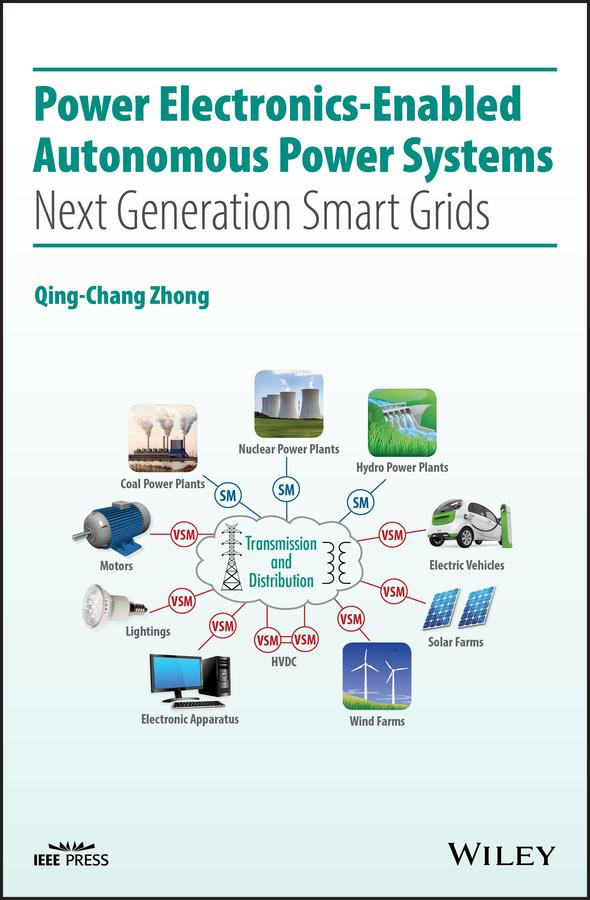
Power systems worldwide are going through a paradigm shift from centralized generation to distributed generation. This book presents the SYNDEM (i.e., synchronized and democratized) grid architecture and its technical routes to harmonize the integration of renewable energy sources, electric vehicles, storage systems, and flexible loads, with the synchronization mechanism of synchronous machines, to enable autonomous operation of power systems, and to promote energy freedom. This is a game changer for the grid. It is the sort of breakthrough — like the touch screen in smart phones — that helps to push an industry from one era to the next, as reported by Keith Schneider, a New York Times correspondent since 1982. This book contains an introductory chapter and additional 24 chapters in five parts: Theoretical Framework, First-Generation VSM (virtual synchronous machines), Second-Generation VSM, Third-Generation VSM, and Case Studies. Most of the chapters include experimental results.
As the first book of its kind for power electronics-enabled autonomous power systems, it
• introduces a holistic architecture applicable to both large and small power systems, including aircraft power systems, ship power systems, microgrids, and supergrids
• provides latest research to address the unprecedented challenges faced by power systems and to enhance grid stability, reliability, security, resiliency, and sustainability
• demonstrates how future power systems achieve harmonious interaction, prevent local faults from cascading into wide-area blackouts, and operate autonomously with minimized cyber-attacks
• highlights the significance of the SYNDEM concept for power systems and beyond
Power Electronics-Enabled Autonomous Power Systems is an excellent book for researchers, engineers, and students involved in energy and power systems, electrical and control engineering, and power electronics. The SYNDEM theoretical framework chapter is also suitable for policy makers, legislators, entrepreneurs, commissioners of utility commissions, energy and environmental agency staff, utility personnel, investors, consultants, and attorneys.
As the first book of its kind for power electronics-enabled autonomous power systems, it
• introduces a holistic architecture applicable to both large and small power systems, including aircraft power systems, ship power systems, microgrids, and supergrids
• provides latest research to address the unprecedented challenges faced by power systems and to enhance grid stability, reliability, security, resiliency, and sustainability
• demonstrates how future power systems achieve harmonious interaction, prevent local faults from cascading into wide-area blackouts, and operate autonomously with minimized cyber-attacks
• highlights the significance of the SYNDEM concept for power systems and beyond
Power Electronics-Enabled Autonomous Power Systems is an excellent book for researchers, engineers, and students involved in energy and power systems, electrical and control engineering, and power electronics. The SYNDEM theoretical framework chapter is also suitable for policy makers, legislators, entrepreneurs, commissioners of utility commissions, energy and environmental agency staff, utility personnel, investors, consultants, and attorneys.
Payez facilement par carte, Klarna, Apple Pay ou Google Pay. Pas satisfait ? Vous avez toujours une garantie de remboursement de 14 jours. En savoir plus dans nos conditions. Si vous avez des questions, envoyez-nous un e-mail à hello@memmo.org.
Memmo facilite tes études, où que tu sois dans le monde. On rassemble tes manuels de cours et des outils d'étude intelligents au même endroit : résumés, quiz, podcasts et flashcards. Et il y a Ted, ton compagnon d'étude qui répond à toutes tes questions. Plus de 50 000 étudiants étudient déjà ici – conçu pour t'aider à apprendre plus vite et à moins stresser.