
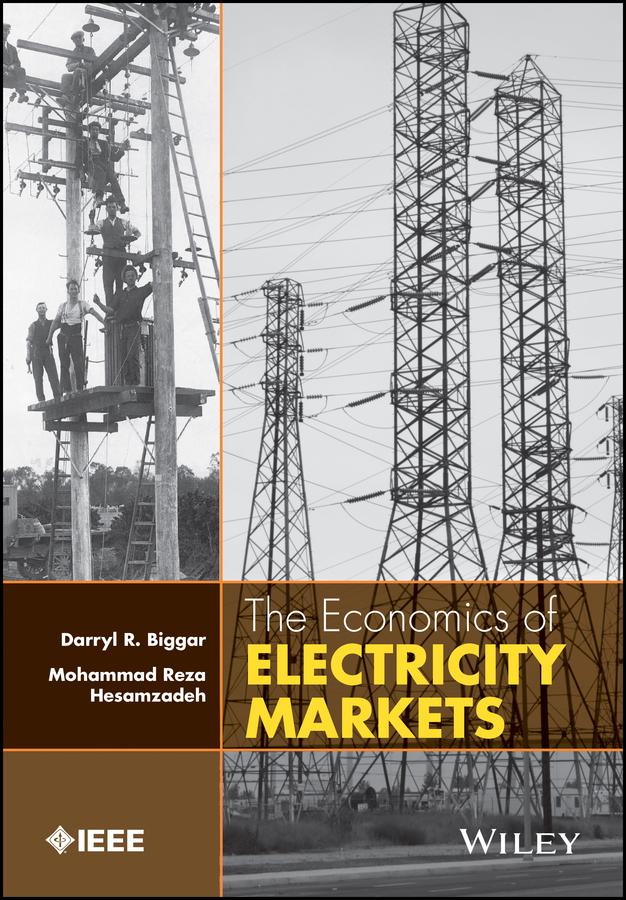
With an accessible and progressive style written in straight-forward language, this book covers everything an engineer or economist needs to know to understand, operate within, plan and design an effective liberalized electricity industry, thus serving as both a useful teaching text and a valuable reference. The book focuses on principles and theory which are independent of any one market design. It outlines where the theory is not implemented in practice, perhaps due to other over-riding concerns. The book covers the basic modelling of electricity markets, including the impact of uncertainty (an integral part of generation investment decisions and transmission cost-benefit analysis). It draws out the parallels to the Nordpool market (an important point of reference for Europe). Written from the perspective of the policy-maker, the first part provides the introductory background knowledge required. This includes an understanding of basic economics concepts such as supply and demand, monopoly, market power and marginal cost. The second part of the book asks how a set of generation, load, and transmission resources should be efficiently operated, and the third part focuses on the generation investment decision. Part 4 addresses the question of the management of risk and Part 5 discusses the question of market power. Any power system must be operated at all times in a manner which can accommodate the next potential contingency. This demands responses by generators and loads on a very short timeframe. Part 6 of the book addresses the question of dispatch in the very short run, introducing the distinction between preventive and corrective actions and why preventive actions are sometimes required. The seventh part deals with pricing issues that arise under a regionally-priced market, such as the Australian NEM. This section introduces the notion of regions and interconnectors and how to formulate constraints for the correct pricing outcomes (the issue of "constraint orientation"). Part 8 addresses the fundamental and difficult issue of efficient transmission investment, and finally Part 9 covers issues that arise in the retail market.
- Bridges the gap between engineering and economics in electricity, covering both the economics and engineering knowledge needed to accurately understand, plan and develop the electricity market
- Comprehensive coverage of all the key topics in the economics of electricity markets
- Covers the latest research and policy issues as well as description of the fundamental concepts and principles that can be applied across all markets globally
- Numerous worked examples and end-of-chapter problems
- Companion website holding solutions to problems set out in the book, also the relevant simulation (GAMS) codes
Payez facilement par carte, Klarna, Apple Pay ou Google Pay. Pas satisfait ? Vous avez toujours une garantie de remboursement de 14 jours. En savoir plus dans nos conditions. Si vous avez des questions, envoyez-nous un e-mail à hello@memmo.org.
Memmo facilite tes études, où que tu sois dans le monde. On rassemble tes manuels de cours et des outils d'étude intelligents au même endroit : résumés, quiz, podcasts et flashcards. Et il y a Ted, ton compagnon d'étude qui répond à toutes tes questions. Plus de 50 000 étudiants étudient déjà ici – conçu pour t'aider à apprendre plus vite et à moins stresser.