
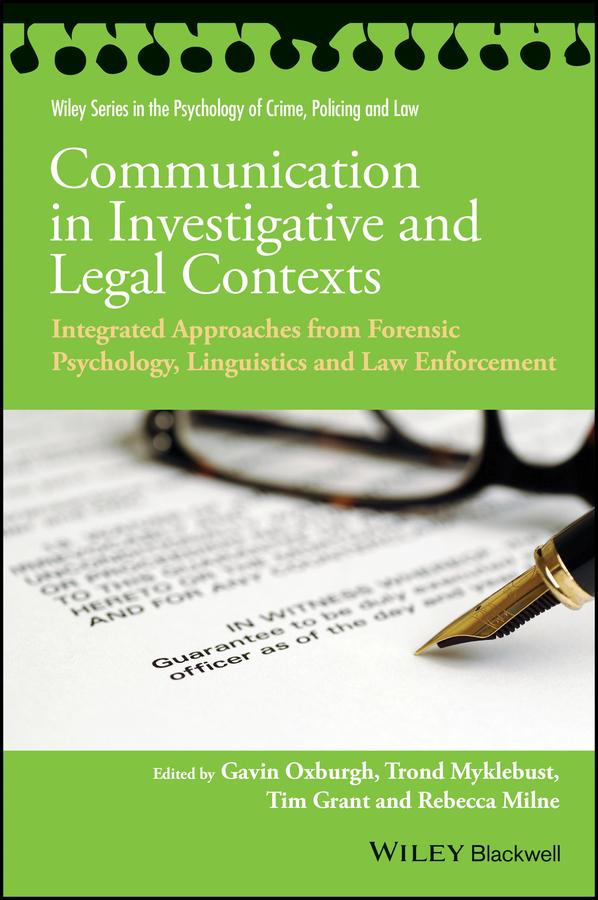
Communication in Investigative and Legal Contexts
Despite a number of research studies, there remain significant differences of opinion among psychologists, linguists and other practitioners on how best to describe particular types of questions and communicate most effectively in forensic contexts. Communication in Investigative and Legal Contexts brings clarity to the subject by providing readers with in-depth coverage of the complex area of communication in forensic settings, for example during investigative interviewing of victims, witnesses and suspects/high-interest groups, during discourse in courtrooms, and via legal intermediaries and interpreters. Drawing on knowledge from forensic psychology, linguistics and law enforcement worldwide, the text is unique in bridging the gap between these fields in a definitive guide to best practice, with chapters written by teams bringing together expertise and specialties from each field. Part of the Wiley Series in the Psychology of Crime, Policing and Law, the book is also linked to the International Investigative Interviewing Research Group (iIIRG), a worldwide network of interviewing professionals working with international bodies committed to improving investigative interviewing and ensuring all improvements are underpinned by a robust evidence base. Contributors are sourced from North America, Europe, and Asia Pacific, ensuring International relevance.
Payez facilement par carte, Klarna, Apple Pay ou Google Pay. Pas satisfait ? Vous avez toujours une garantie de remboursement de 14 jours. En savoir plus dans nos conditions. Si vous avez des questions, envoyez-nous un e-mail à hello@memmo.org.
Memmo facilite tes études, où que tu sois dans le monde. On rassemble tes manuels de cours et des outils d'étude intelligents au même endroit : résumés, quiz, podcasts et flashcards. Et il y a Ted, ton compagnon d'étude qui répond à toutes tes questions. Plus de 50 000 étudiants étudient déjà ici – conçu pour t'aider à apprendre plus vite et à moins stresser.