
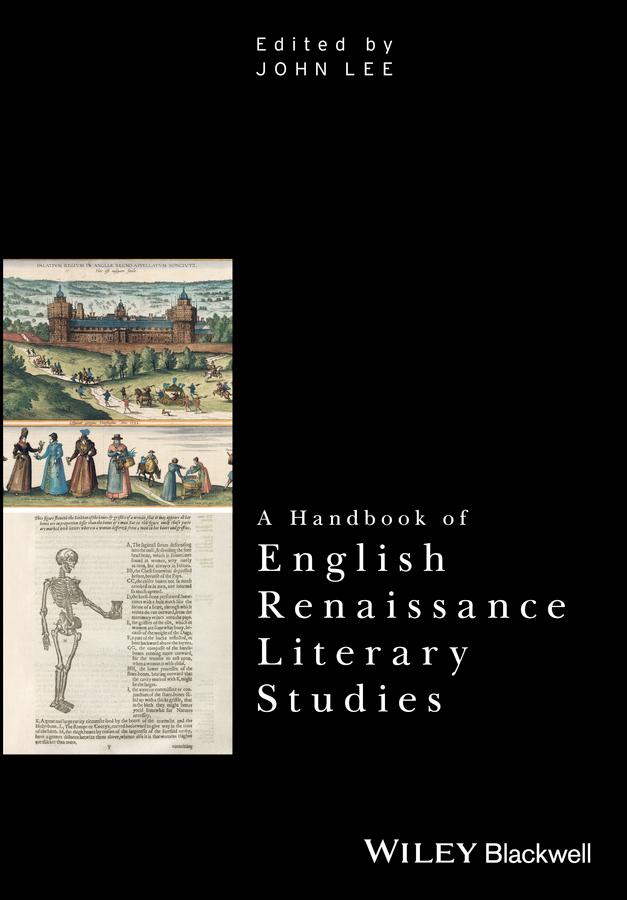
Provides a detailed map of contemporary critical theory in Renaissance and Early Modern English literary studies beyond Shakespeare
A Handbook of English Renaissance Literary Studies is a groundbreaking guide to the contemporary engagement with critical theory within the larger disciplinary area of Renaissance and Early Modern studies. Comprising commissioned contributions from leading international scholars, it provides an overview of literary theory, beyond Shakespeare, focusing on most major figures, as well as some lesser-known writers of the period.
This book represents an important first step in bridging the divide between the abundance of titles which explore applications of theory in Shakespeare studies, and the relative lack of such texts concerning English Literary Renaissance studies as a whole, which includes major figures such as Marlowe, Jonson, Donne, and Milton. The tripartite structure offers a map of the critical landscape so that students can appreciate the breadth of the work being done, along with an exploration of the ways in which the treatments of or approaches to key issues have changed over time.
Handbook of English Renaissance Literary Studies is must-reading for undergraduate and postgraduate students of early modern and Renaissance English literature, as well as their instructors and advisors.
Divided into three main sections, “Conditions of Subjectivity,” “Spaces, Places, and Forms,” and “Practices and Theories,” A Handbook of English Renaissance Literary Studies:
- Provides an overview of theoretical work and the theoretical-informed competencies which are central to the teaching of English Renaissance literary studies beyond Shakespeare
- Provides a map of the critical landscape of the field to provide students with an opportunity to appreciate the breadth of the work done
- Features newly-commissioned essays in representative subject areas to offer a clear picture of the contemporary theoretically-engaged work in the field
- Explores the ways in which the treatments of or approaches to key issues have changed over time
- Offers examples of the ways in which the practice of a theoretically-engaged criticism may enrich the personal and professional lives of critics, and the culture in which such critical practice takes place
Payez facilement par carte, Klarna, Apple Pay ou Google Pay. Pas satisfait ? Vous avez toujours une garantie de remboursement de 14 jours. En savoir plus dans nos conditions. Si vous avez des questions, envoyez-nous un e-mail à hello@memmo.org.
Memmo facilite tes études, où que tu sois dans le monde. On rassemble tes manuels de cours et des outils d'étude intelligents au même endroit : résumés, quiz, podcasts et flashcards. Et il y a Ted, ton compagnon d'étude qui répond à toutes tes questions. Plus de 50 000 étudiants étudient déjà ici – conçu pour t'aider à apprendre plus vite et à moins stresser.