
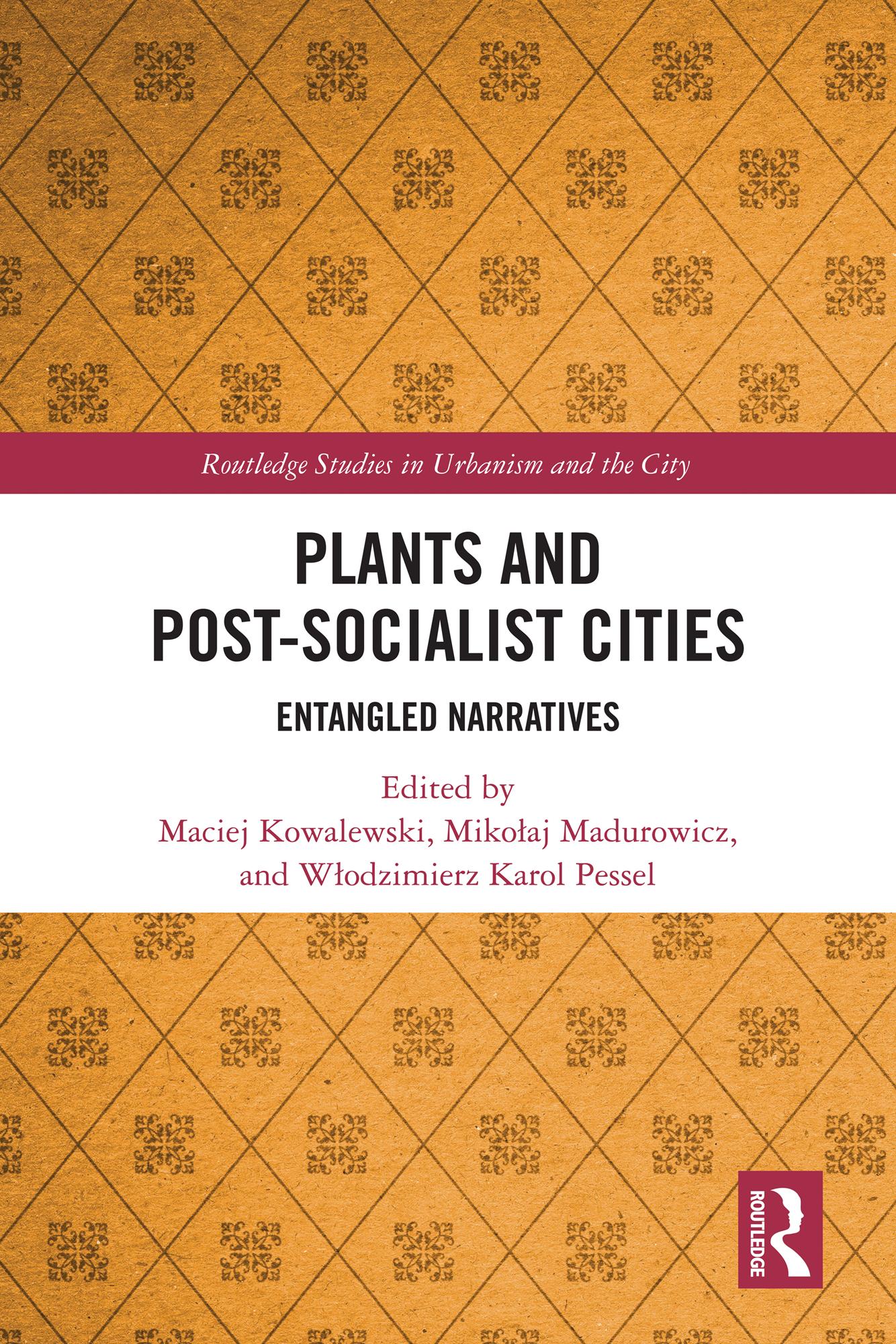
This book offers a theoretically informed exploration of the political, cultural, and ecological significance of urban greenery in post-socialist cities. It traces how plants mediate among memory, infrastructure, and regimes of power across diverse historical and geographical contexts.
The book develops a vocabulary for understanding plants as actors, symbols, archives, and processes within urban transformation. It does so through case studies ranging from Polish housing estates, Nowa Huta, the Upper Silesian brownfields, Elbląg, Szczecin, Warsaw, Vilnius, and Belgrade to Indian urban imaginaries and Chornobyl’s gardens. Drawing on environmental humanities, urban studies, critical plant studies, political ecology, plant blindness, post-political theory, and more-than-human approaches, the book shows how vegetal life participates in memory, governance, conflict, decay, and everyday urban experience.
This book will appeal to scholars and advanced students in urban studies, cultural studies, environmental humanities, anthropology, and human geography, as well as to readers interested in post-socialist transformations, urban ecology, and more-than-human approaches to the city.
Payez facilement par carte, Klarna, Apple Pay ou Google Pay. Pas satisfait ? Vous avez toujours une garantie de remboursement de 14 jours. En savoir plus dans nos conditions. Si vous avez des questions, envoyez-nous un e-mail à hello@memmo.org.
Memmo facilite tes études, où que tu sois dans le monde. On rassemble tes manuels de cours et des outils d'étude intelligents au même endroit : résumés, quiz, podcasts et flashcards. Et il y a Ted, ton compagnon d'étude qui répond à toutes tes questions. Plus de 50 000 étudiants étudient déjà ici – conçu pour t'aider à apprendre plus vite et à moins stresser.