
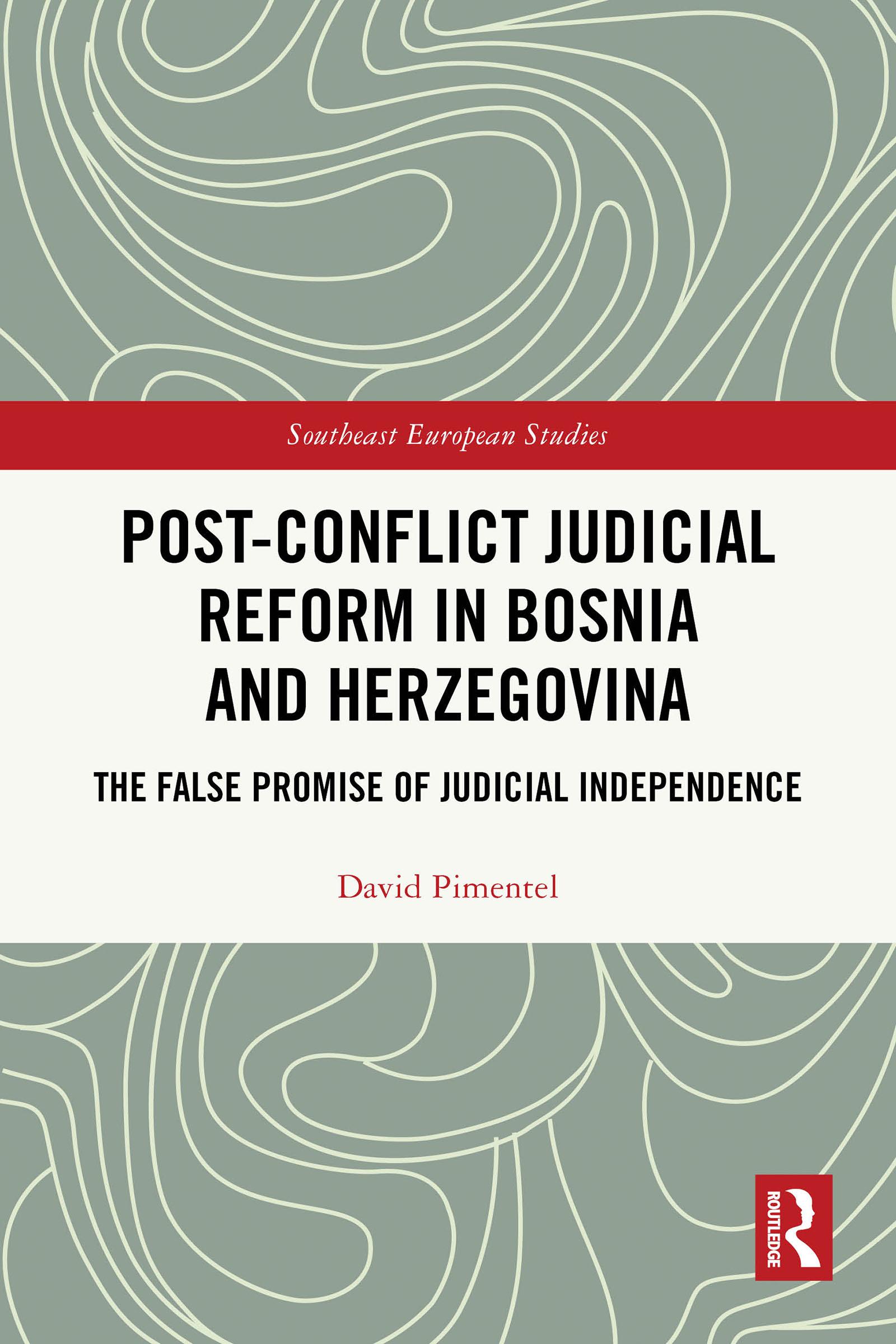
Judicial reform became a priority for international development in the 1990s and remains central to EU enlargement conditionality today. Yet despite significant investment, there is limited empirical evidence about the effectiveness of these initiatives. This book addresses this gap through a comprehensive longitudinal study of Bosnia and Herzegovina's post-war judicial reforms.
Drawing on unique survey data from judges and prosecutors, it provides the first long-term empirical assessment of post-conflict judicial reform outcomes. The findings reveal a complex picture: while reforms successfully established judicial independence and insulated courts from ethnic politics, they also created new vulnerabilities to corruption and impunity. The book demonstrates that judicial independence, when introduced without adequate integrity safeguards, can become counterproductive to rule of law objectives. Considering original survey data spanning more than two decades of post-reform implementation, it offers a critical analysis of judicial independence and accountability tensions and evidence-based insights for EU conditionality and development policy.
It will be of interest to scholars and students of comparative law, transitional justice, and development studies, challenging prevailing assumptions about judicial independence, particularly in post-conflict settings.
Payez facilement par carte, Klarna, Apple Pay ou Google Pay. Pas satisfait ? Vous avez toujours une garantie de remboursement de 14 jours. En savoir plus dans nos conditions. Si vous avez des questions, envoyez-nous un e-mail à hello@memmo.org.
Memmo facilite tes études, où que tu sois dans le monde. On rassemble tes manuels de cours et des outils d'étude intelligents au même endroit : résumés, quiz, podcasts et flashcards. Et il y a Ted, ton compagnon d'étude qui répond à toutes tes questions. Plus de 50 000 étudiants étudient déjà ici – conçu pour t'aider à apprendre plus vite et à moins stresser.