
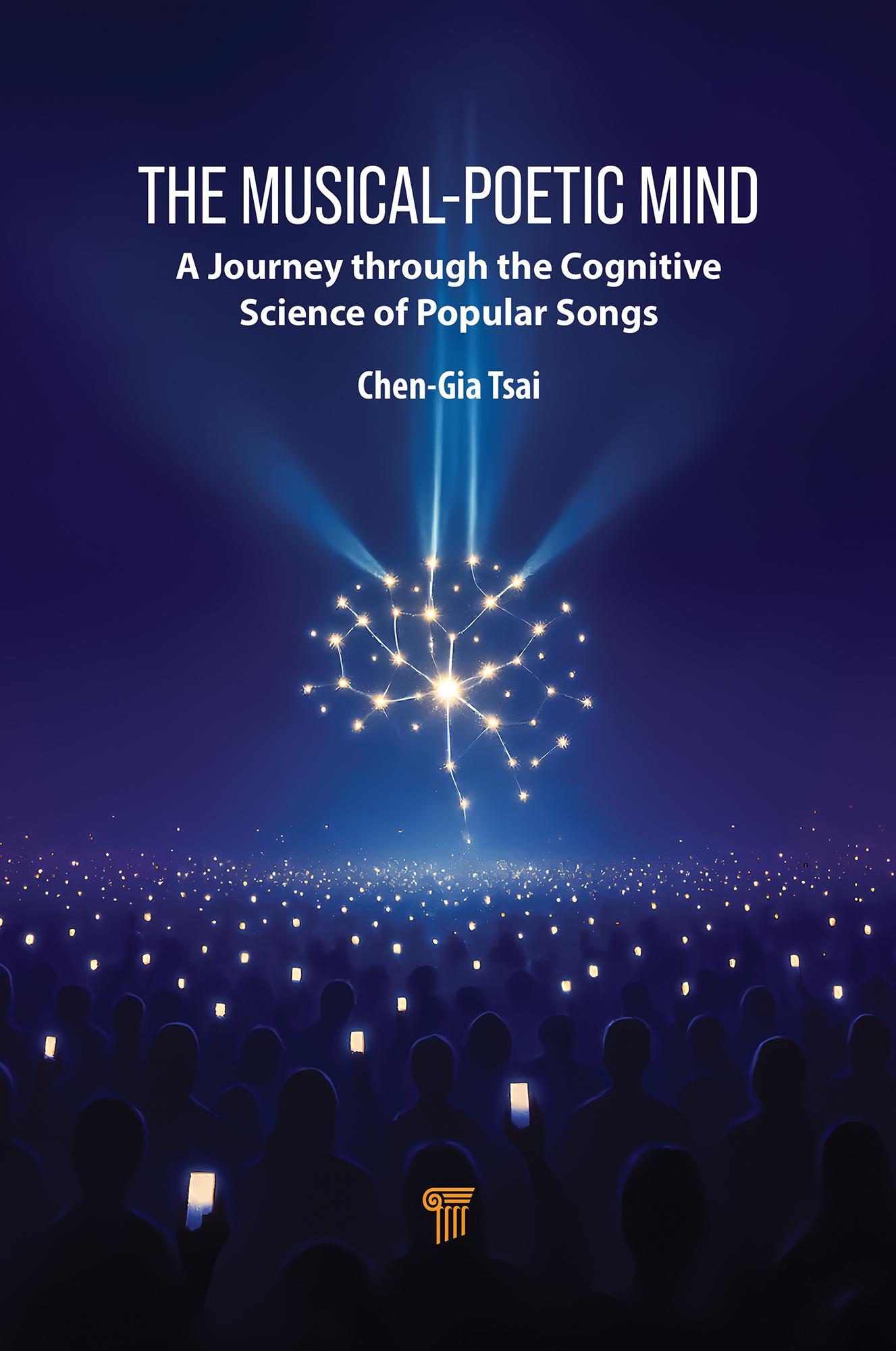
Understanding our profound connection to popular music is a complex endeavor, requiring an integrated knowledge of cognitive neuroscience, evolutionary biology, musicology, and cultural studies. The Musical-Poetic Mind gives a comprehensive overview of how the brain processes popular songs, exploring the neural mechanisms behind tonality and groove, the role of prediction in musical pleasure, and the cognitive principles underlying song structures like the verse–chorus form.
This book compiles and details the evolutionary parallels between human and animal song cultures, the neural pathways that distinguish song from speech, and the cognitive and physiological effects of musical features like syncopation, groove, and structural transitions. The use of real-world songs as stimuli, departing from simplified lab-based approaches, allows for a more ecologically valid investigation of musical experience.
Besides general aspects of music perception, the book provides a special focus on the verse-to-chorus transition as a model for exploring musical anticipation and reward. It details how musical cues preceding a chorus engage the brain’s dopaminergic pathways, fueling a state of motivated cognitive control that enhances learning and emotional engagement. The neural dynamics of this process, from wanting to liking, are emphasized.
What makes this book so special is its narrative approach, which weaves the author’s own research journey and neuroimaging findings with analysis of a range of popular songs, drawing on examples from influential artists such as Adele and Taylor Swift to illustrate key concepts. This offers readers a direct inside view of how a cognitive neuroscientist applies theoretical concepts to real-world music, advocating for naturalistic and ecologically valid research methods.
The book is an invaluable resource for advanced undergraduate- and graduate-level students of cognitive science, neuroscience, psychology, and musicology; music producers, songwriters, and artists; researchers in music cognition, affective neuroscience, and cultural evolution; and everyone with an interest in predictive processing and the neural basis of aesthetic experiences.
Payez facilement par carte, Klarna, Apple Pay ou Google Pay. Pas satisfait ? Vous avez toujours une garantie de remboursement de 14 jours. En savoir plus dans nos conditions. Si vous avez des questions, envoyez-nous un e-mail à hello@memmo.org.
Memmo facilite tes études, où que tu sois dans le monde. On rassemble tes manuels de cours et des outils d'étude intelligents au même endroit : résumés, quiz, podcasts et flashcards. Et il y a Ted, ton compagnon d'étude qui répond à toutes tes questions. Plus de 50 000 étudiants étudient déjà ici – conçu pour t'aider à apprendre plus vite et à moins stresser.