
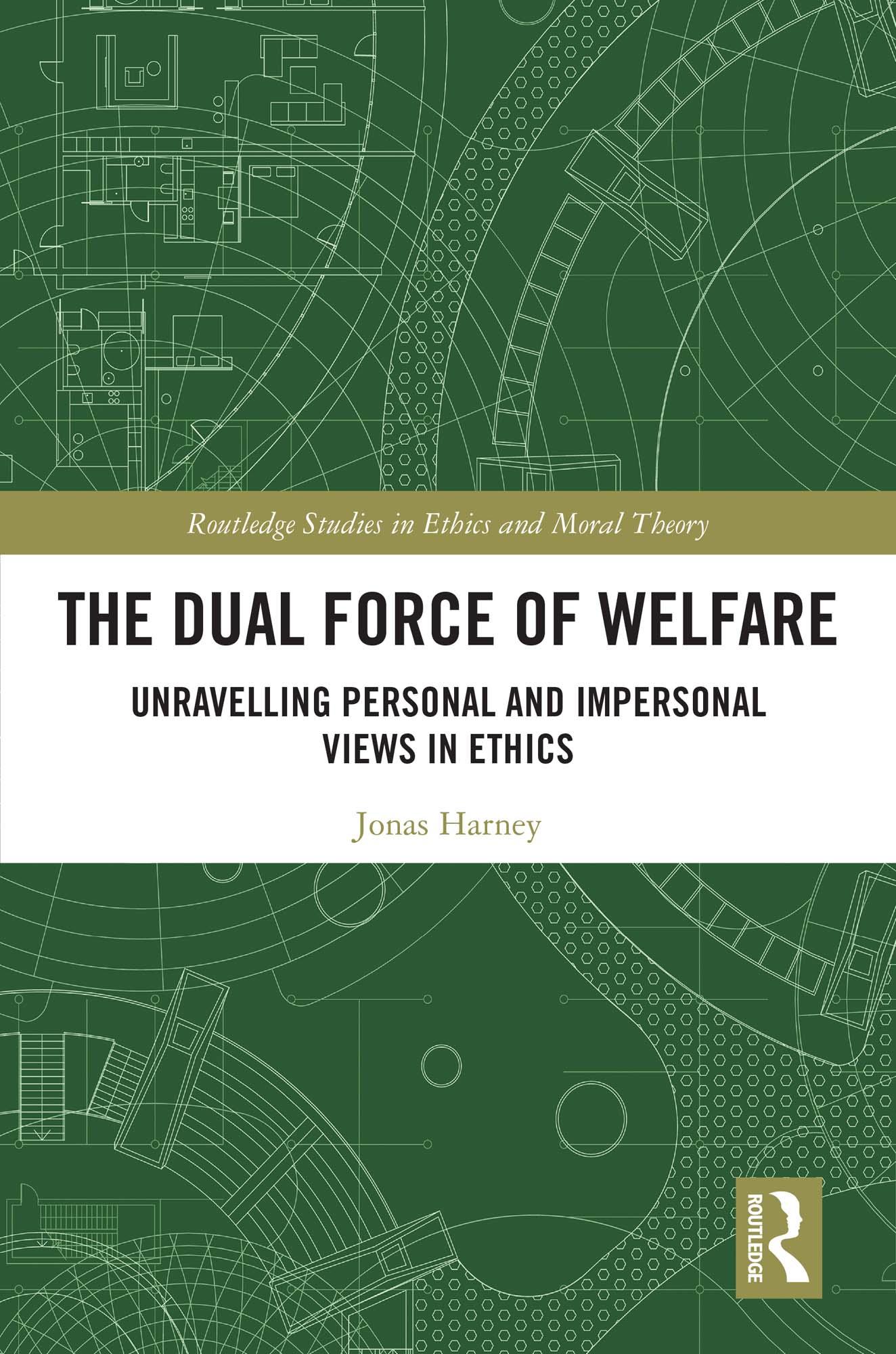
This book explores the moral significance of welfare by dissecting a dichotomy central to moral theory and welfare ethics: the distinction between personal and impersonal views. It systematically examines this distinction, revealing its ambiguities and implications for moral judgements in general and issues of population ethics and interpersonal welfare trade-offs in particular.
This book argues for the Dual Personal View of Welfare, asserting that welfare has moral value both in absolute terms and through comparative considerations for individuals. Structured in three parts, it first disambiguates the personal-impersonal distinction, then evaluates its various aspects, and finally develops a dual theory of outcome comparisons. The author’s innovative approach addresses challenges such as the intransitivity of "better than" and the complexities of population ethics, offering a set-relative strategy that re-establishes transitivity within fixed sets of outcomes. By providing the first systematic analysis of personal and impersonal views, this book promises to reshape discussions on the moral value of welfare and its implications for future generations.
Accessible yet rigorous, The Dual Force of Welfare is essential for moral philosophers and ethicists, but will also be of great interest to scholars in related fields such as decision theory, political theory, and social economics.
Payez facilement par carte, Klarna, Apple Pay ou Google Pay. Pas satisfait ? Vous avez toujours une garantie de remboursement de 14 jours. En savoir plus dans nos conditions. Si vous avez des questions, envoyez-nous un e-mail à hello@memmo.org.
Memmo facilite tes études, où que tu sois dans le monde. On rassemble tes manuels de cours et des outils d'étude intelligents au même endroit : résumés, quiz, podcasts et flashcards. Et il y a Ted, ton compagnon d'étude qui répond à toutes tes questions. Plus de 50 000 étudiants étudient déjà ici – conçu pour t'aider à apprendre plus vite et à moins stresser.