
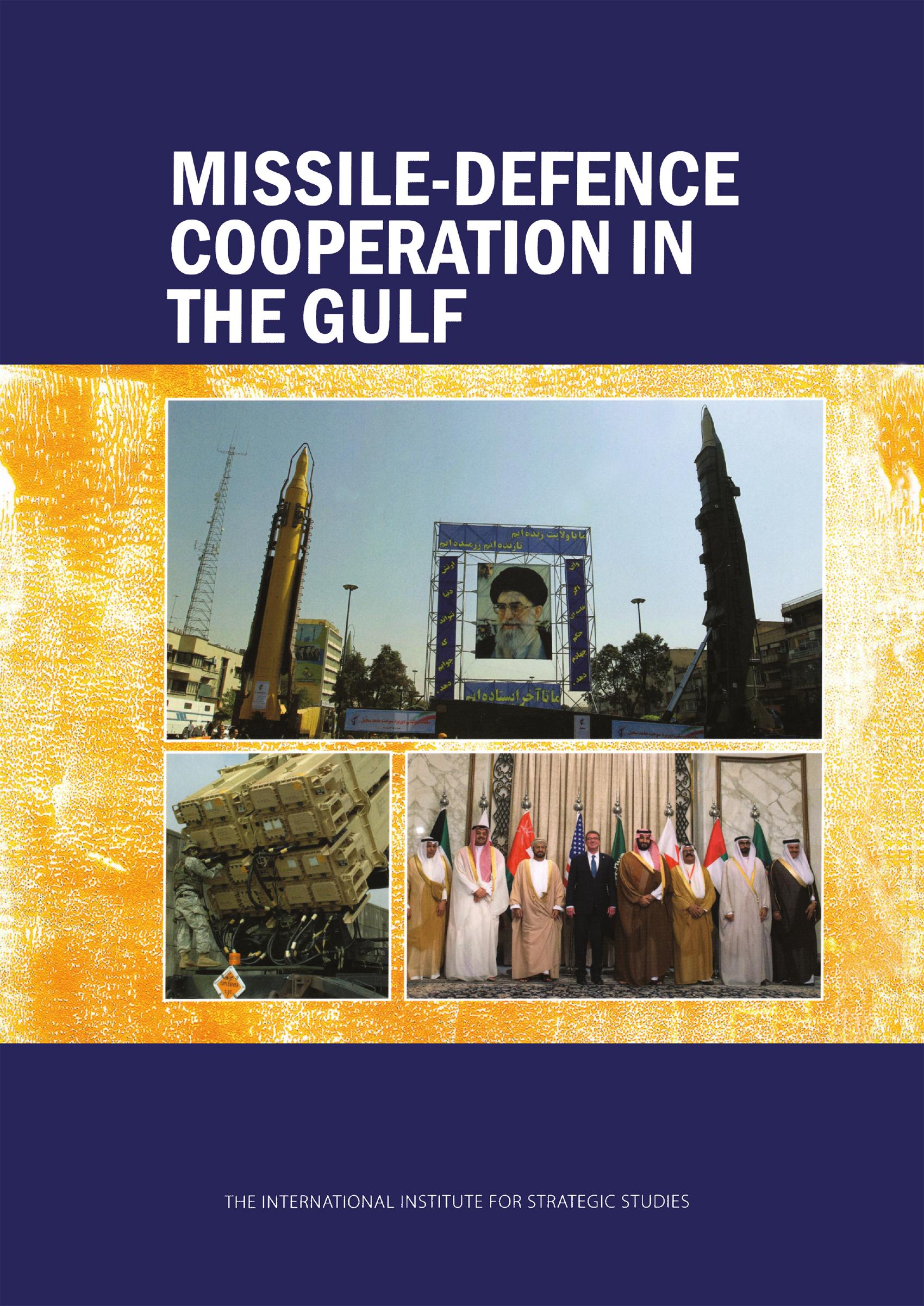
Iran’s short- and medium-range ballistic missiles are instrumental to its military doctrine and deterrence strategy. Yet despite having long faced a direct threat from these missiles, the members of the Gulf Cooperation Council remain unable or unwilling to effectively coordinate and integrate their missile-defence capabilities. They have gained a measure of protection through bilateral procurement of technology and expertise from the United States. But a more strategically efficient approach would be to pool resources such as radars and other sensors, and to integrate their systems in ways that require difficult compromises between state sovereignty and security.
Written by a team of IISS experts, Missile-Defence Cooperation in the Gulf contributes to the ongoing policy debate on Middle Eastern collective security. The report examines the development of Iran’s missile capabilities over several decades, parallel efforts to counter the threat they pose by Gulf Arab states and the broader evolution of security structures in the region. It is a valuable resource for policymakers, scholars and government officials seeking to understand the ‘security complex’ that encompasses all states in the Gulf, and that shapes their decisions on politically sensitive issues of missile defence.
Payez facilement par carte, Klarna, Apple Pay ou Google Pay. Pas satisfait ? Vous avez toujours une garantie de remboursement de 14 jours. En savoir plus dans nos conditions. Si vous avez des questions, envoyez-nous un e-mail à hello@memmo.org.
Memmo facilite tes études, où que tu sois dans le monde. On rassemble tes manuels de cours et des outils d'étude intelligents au même endroit : résumés, quiz, podcasts et flashcards. Et il y a Ted, ton compagnon d'étude qui répond à toutes tes questions. Plus de 50 000 étudiants étudient déjà ici – conçu pour t'aider à apprendre plus vite et à moins stresser.