
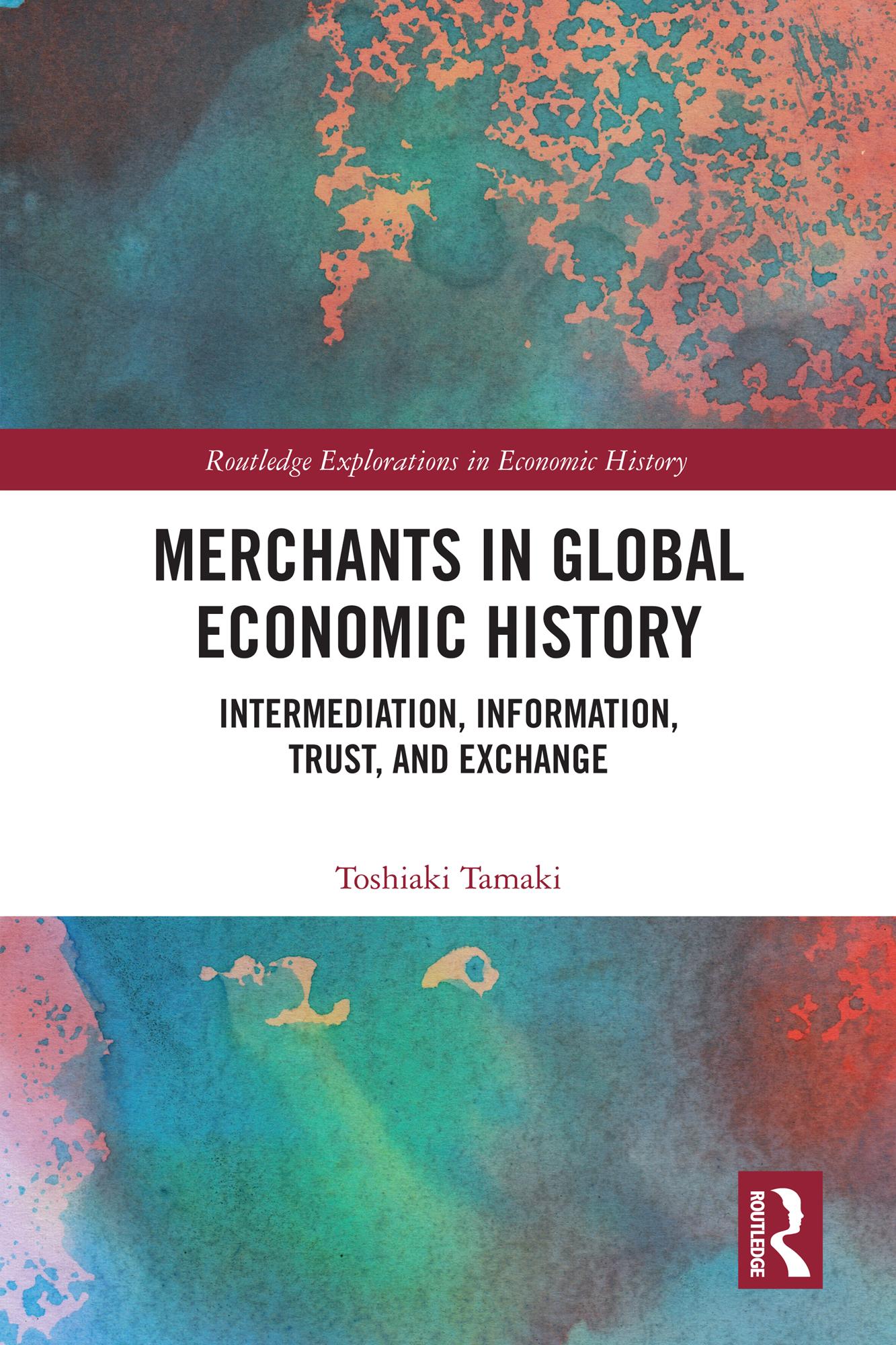
In this book, Toshiaki Tamaki analyses merchant and entrepreneurial activity from ancient times to the twenty-first century, arguing that these intermediaries drive global market expansion and institutional development, as they help to connect distant regions and reduce information asymmetry.
The book begins by framing global economic history through the lens of Homo mobilis (the mobile human) and Homo faber (the fabricating human). It argues that global trade cannot be understood fully without considering how merchants help markets expand through the transmission of information, trust, reputation and commercial knowledge. The book then contextualises this argument through a global survey of trading empires, exploring how merchants and intermediaries profit not through ownership of goods but through the act of exchange. This long-term narrative spans from Mesopotamian traders to Phoenician seafarers to Asian shipping agents and even the global logistics giants of today. Through this survey, readers gain a deeper understanding of how information, trust and circulation – not just production – have shaped the global economy.
Offering a compelling alternative to static economic models and supply-side theories, this book will be of interest to scholars and students of global history, economic history and the history of capitalism.
Payez facilement par carte, Klarna, Apple Pay ou Google Pay. Pas satisfait ? Vous avez toujours une garantie de remboursement de 14 jours. En savoir plus dans nos conditions. Si vous avez des questions, envoyez-nous un e-mail à hello@memmo.org.
Memmo facilite tes études, où que tu sois dans le monde. On rassemble tes manuels de cours et des outils d'étude intelligents au même endroit : résumés, quiz, podcasts et flashcards. Et il y a Ted, ton compagnon d'étude qui répond à toutes tes questions. Plus de 50 000 étudiants étudient déjà ici – conçu pour t'aider à apprendre plus vite et à moins stresser.