
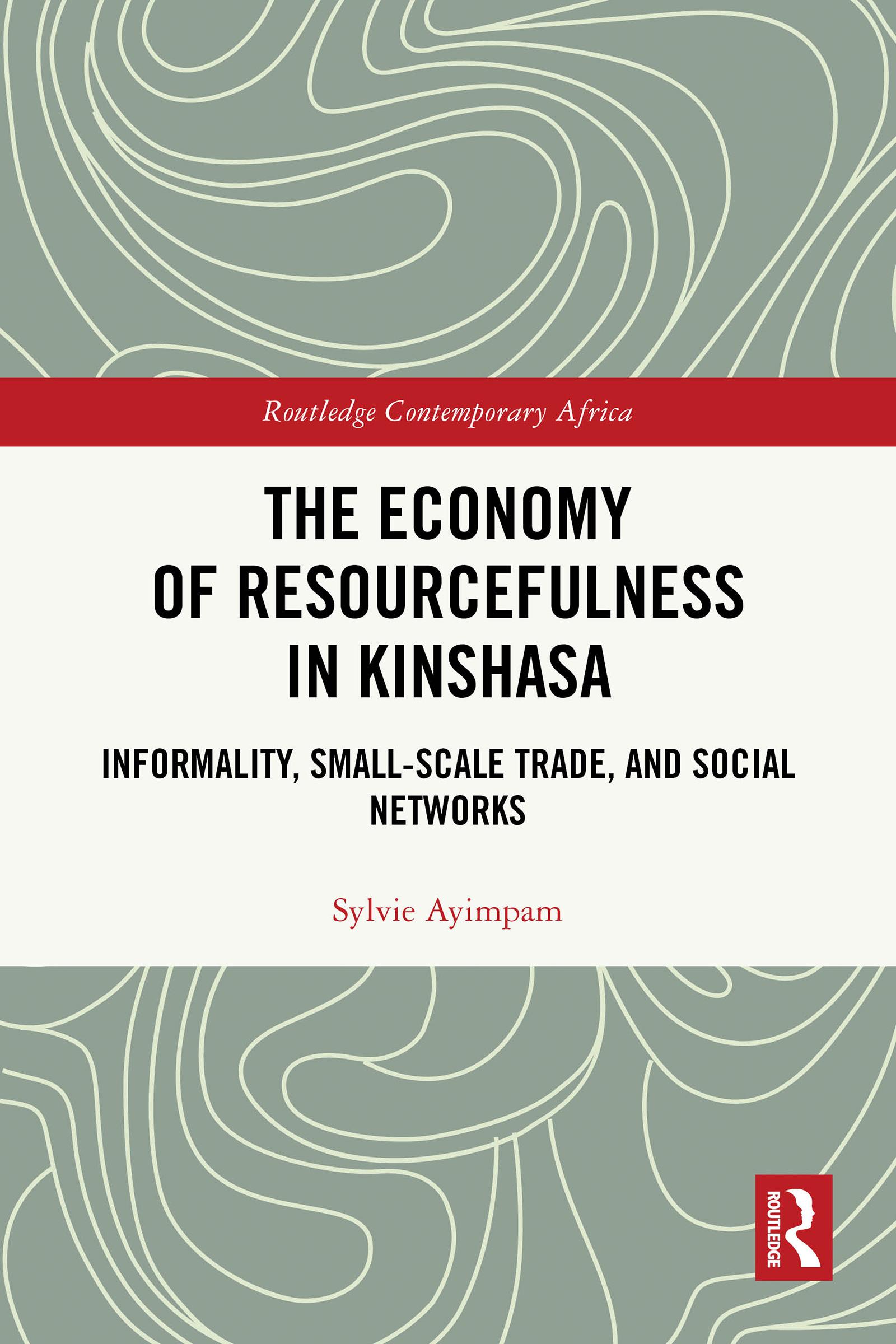
How, in a context of prolonged economic and political crisis, do city dwellers reinvent the means of their survival in Kinshasa? This book answers that question. Through fine-grained ethnography, it shows how micro-social arrangements enable small-scale traders to provision the city and ordinary citizens to keep living, immersing the reader in the many forms of “resourcefulness” that organize small-scale trade across Kinshasa’s markets.
The book moves beyond the formal/informal binary to theorize an “economy of resourcefulness,” where economic, social, political, and cultural dimensions are tightly entangled. It traces how cooperation and cunning, solidarity and extortion, coexist in everyday pursuits of income under precarious conditions. Following retail circuits while attending to shifting state presences, digital payments, congestion, and risk, it reconstructs the practical norms and negotiated rules through which actors coordinate, conflict, and protect themselves—offering a bottom-up view of governance in practice and of ongoing social change.
This volume will interest scholars and students of African studies, anthropology, sociology, political science, geography, urban studies, and development studies, as well as practitioners concerned with popular economies, urban governance, and everyday livelihoods in the Global South.
Payez facilement par carte, Klarna, Apple Pay ou Google Pay. Pas satisfait ? Vous avez toujours une garantie de remboursement de 14 jours. En savoir plus dans nos conditions. Si vous avez des questions, envoyez-nous un e-mail à hello@memmo.org.
Memmo facilite tes études, où que tu sois dans le monde. On rassemble tes manuels de cours et des outils d'étude intelligents au même endroit : résumés, quiz, podcasts et flashcards. Et il y a Ted, ton compagnon d'étude qui répond à toutes tes questions. Plus de 50 000 étudiants étudient déjà ici – conçu pour t'aider à apprendre plus vite et à moins stresser.