
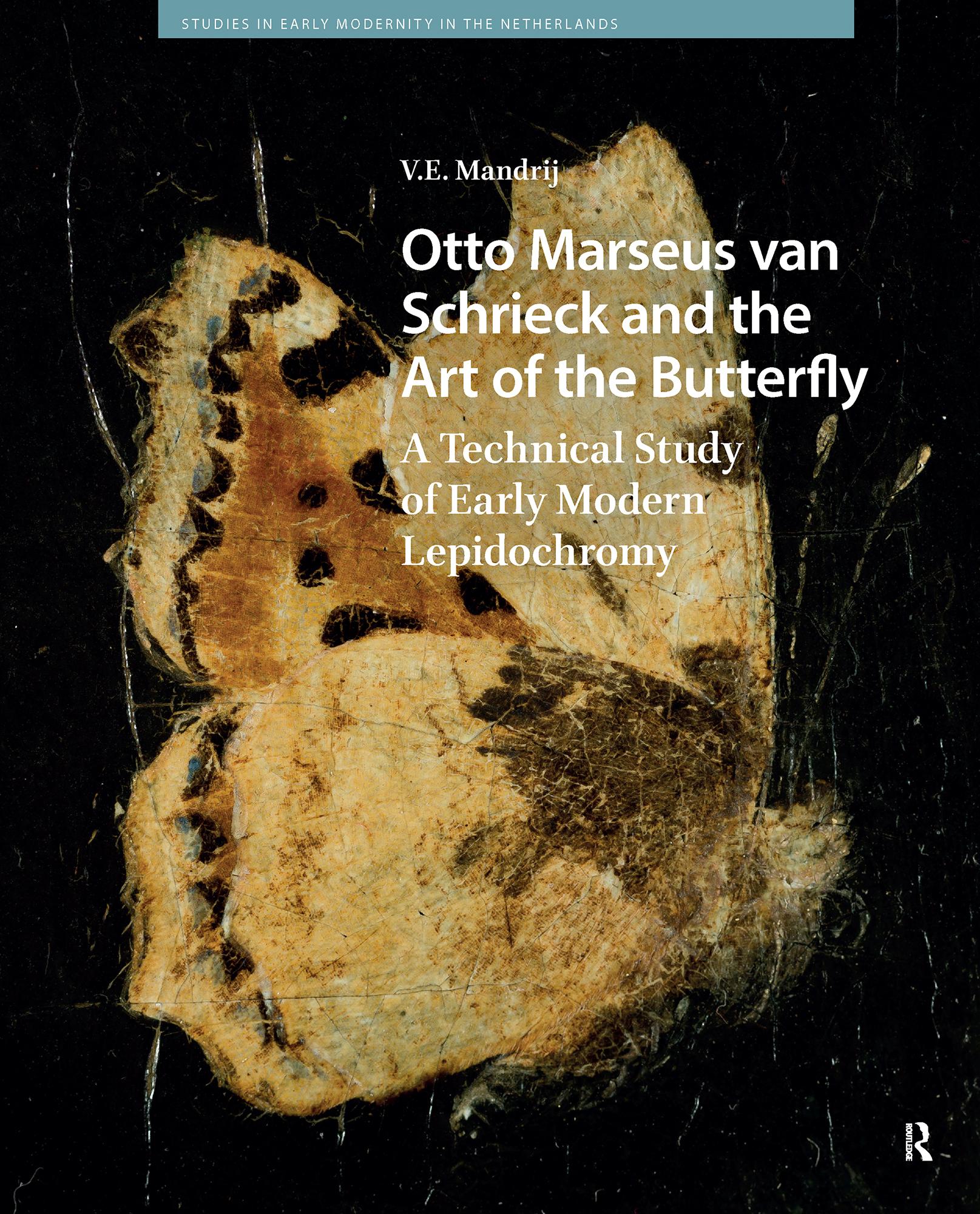
The Dutch painter and naturalist Otto Marseus van Schrieck (c. 1619/20–1678) became famous for an unusual iconography that mixed characteristics of landscape, animal painting, natural history illustration, and still life: the sottobosco paintings. These artworks, which he developed during his voyage to Italy around 1650, represent reptiles, amphibians, and insects in dark forests. To increase the realistic representations of butterflies and moths, he pressed the wings of dead specimens onto the paintings to transfer their original colours. The technique of printing butterfly wings, named lepidochromy in this book, was already being used in the sixteenth century and has been documented as a means of conserving and classifying lepidopterans from the eighteenth through twentieth century.
With a strong focus on the techniques and materials involved in making butterfly imprints, this book introduces readers for the first time to the development, uses, and meanings of lepidochromy in the oeuvre of Otto Marseus van Schrieck at the crossroads of art and natural history.
Payez facilement par carte, Klarna, Apple Pay ou Google Pay. Pas satisfait ? Vous avez toujours une garantie de remboursement de 14 jours. En savoir plus dans nos conditions. Si vous avez des questions, envoyez-nous un e-mail à hello@memmo.org.
Memmo facilite tes études, où que tu sois dans le monde. On rassemble tes manuels de cours et des outils d'étude intelligents au même endroit : résumés, quiz, podcasts et flashcards. Et il y a Ted, ton compagnon d'étude qui répond à toutes tes questions. Plus de 50 000 étudiants étudient déjà ici – conçu pour t'aider à apprendre plus vite et à moins stresser.