
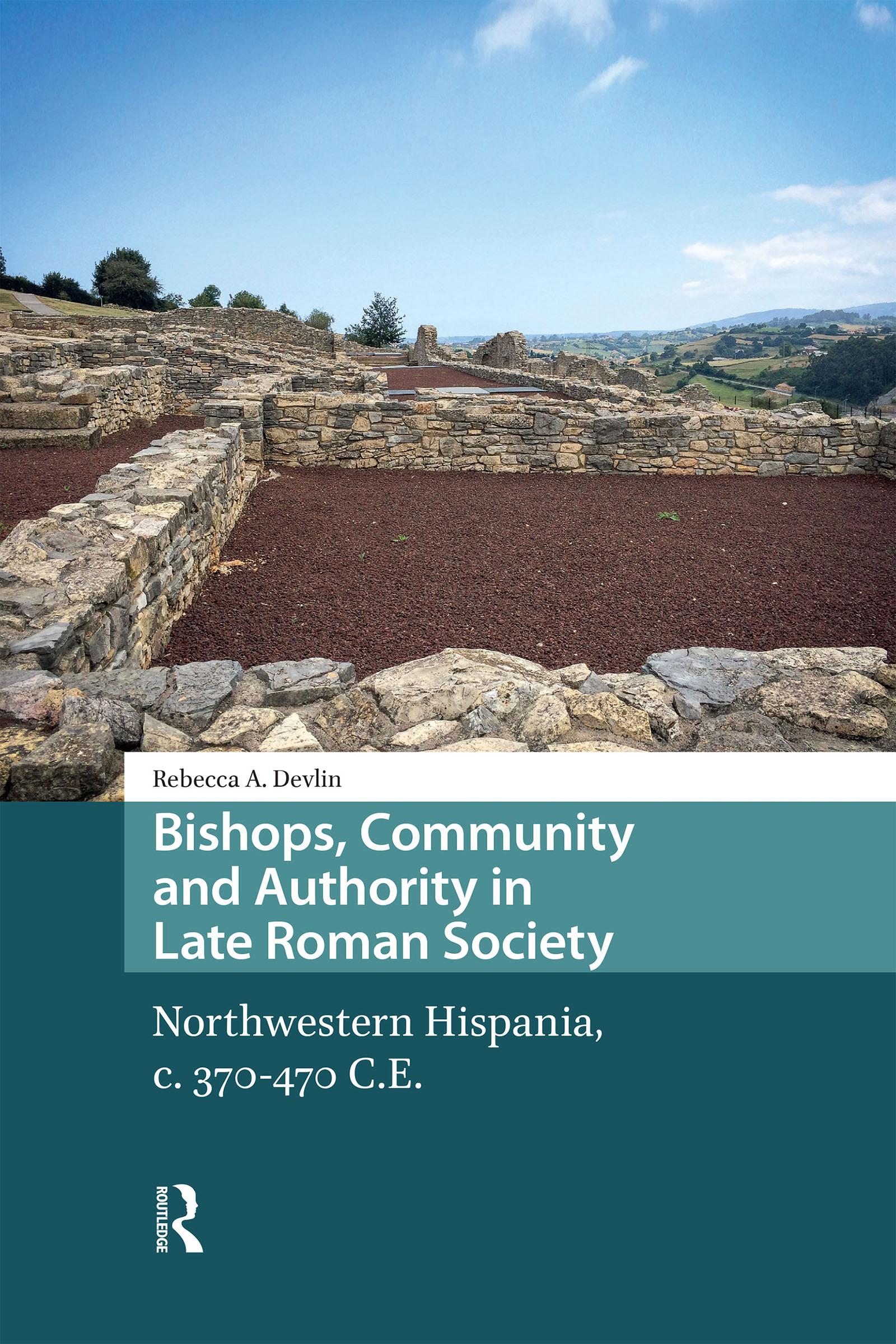
When the bishop Hydatius found himself held hostage in Gallaecia, a Roman province in the northwestern Iberian Peninsula, by a band of Sueves in the year 460, he deployed his experience as an ambassador for his congregation and used his captivity as a tool for negotiating peace. As this example shows, bishops held considerable economic, political, and social power in the early Middle Ages. The expansion of ecclesiastical influence was not, however, a simple consequence of the legalization of Christianity or a power vacuum that followed the withdrawal of imperial authority. The transformation of the episcopate resulted instead from dynamic processes to which all status groups contributed and that are best understood through contextual and diachronic analysis. This monograph focuses on the clerical community in Gallaecia and employs a case study and interdisciplinary approach, incorporating written and material evidence, to put bishops like Hydatius in their larger social and economic contexts to elucidate why the people living and working in their sees would imbue them with increasing authority and explain how their roles within their local communities expanded. This book - Analyses the accumulation of political power, social capital, and local influence by bishops, approaching them as part of a larger social system (understood as a whole) that experienced transformative change across all of its layers. - Deploys all evidence (written, material, etc.), without privileging one form over the other a priori, to produce a deep reconstruction of the social and physical contexts (micro-historical landscapes) in which bishops operated to explain their rise to prominence. - Turns the 'problem' of Iberian early medieval written sources on its head - i.e. the NW and clerical authors are overrepresented - by engaging in a series of diachronic case studies to develop a rich understanding of episcopal influence in the NW as a point of departure for understanding broader developments in the late- and post-Roman periods.
Payez facilement par carte, Klarna, Apple Pay ou Google Pay. Pas satisfait ? Vous avez toujours une garantie de remboursement de 14 jours. En savoir plus dans nos conditions. Si vous avez des questions, envoyez-nous un e-mail à hello@memmo.org.
Memmo facilite tes études, où que tu sois dans le monde. On rassemble tes manuels de cours et des outils d'étude intelligents au même endroit : résumés, quiz, podcasts et flashcards. Et il y a Ted, ton compagnon d'étude qui répond à toutes tes questions. Plus de 50 000 étudiants étudient déjà ici – conçu pour t'aider à apprendre plus vite et à moins stresser.
Tu pourrais aussi aimer
Acheter le livre0