
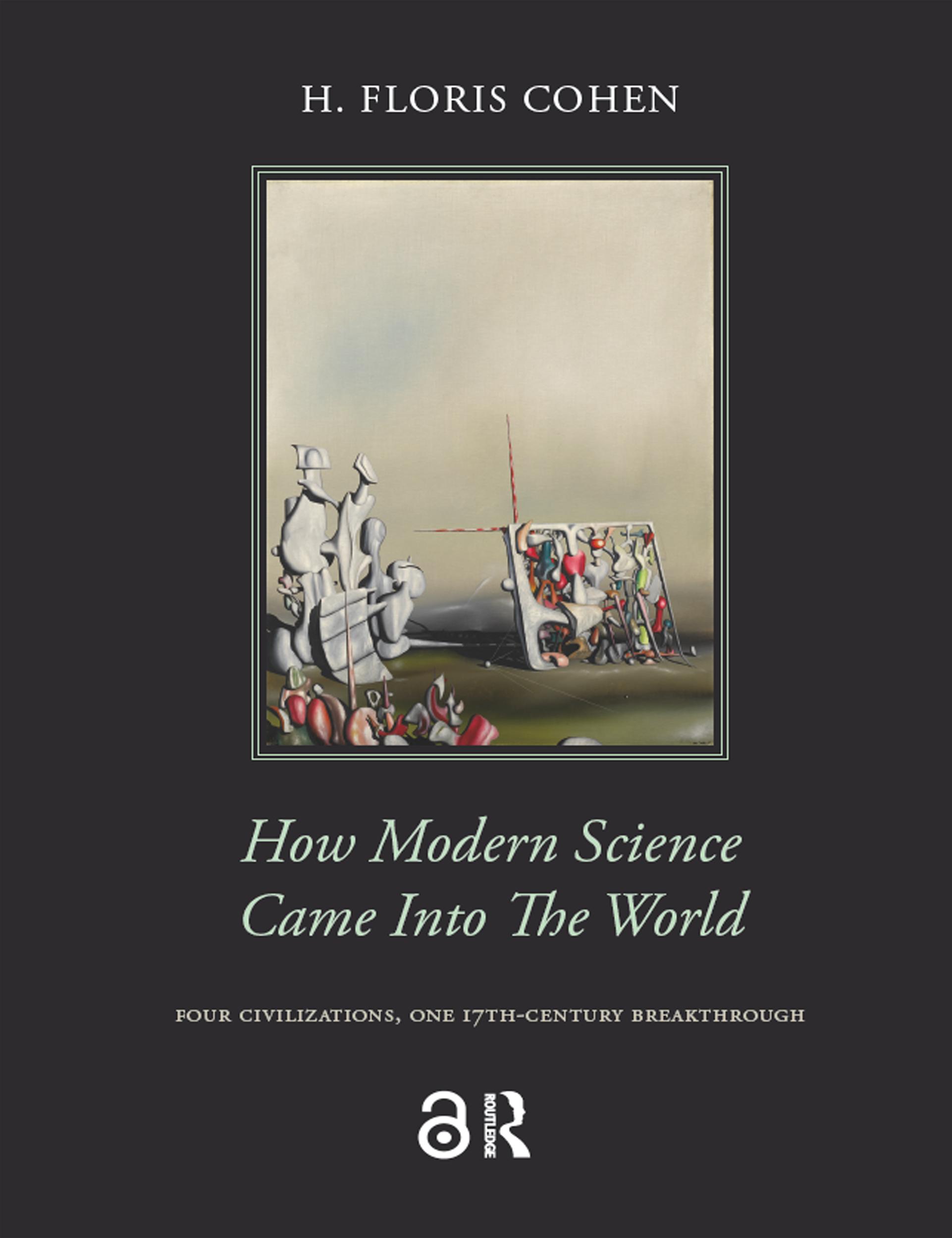
Once upon a time 'The Scientific Revolution of the 17th century' was an innovative concept that inspired a stimulating narrative of how modern science came into the world. Half a century later, what we now know as 'the master narrative' serves rather as a strait-jacket — so often events and contexts just fail to fit in. No attempt has been made so far to replace the master narrative. H. Floris Cohen now comes up with precisely such a replacement. Key to his path-breaking analysis-cum-narrative is a vision of the Scientific Revolution as made up of six distinct yet narrowly interconnected, revolutionary transformations, each of some twenty-five to thirty years' duration. This vision enables him to explain how modern science could come about in Europe rather than in Greece, China, or the Islamic world. It also enables him to explain how half-way into the 17th century a vast crisis of legitimacy could arise and, in the end, be overcome. Building forth on his earlier The Scientific Revolution. A Historiographical Inquiry (1994), his new book takes the latest researches duly into account, while connecting these in highly innovative ways. It is meant throughout as a constructive effort to break up all-too-deeply frozen patterns of thinking about the history of science.
Payez facilement par carte, Klarna, Apple Pay ou Google Pay. Pas satisfait ? Vous avez toujours une garantie de remboursement de 14 jours. En savoir plus dans nos conditions. Si vous avez des questions, envoyez-nous un e-mail à hello@memmo.org.
Memmo facilite tes études, où que tu sois dans le monde. On rassemble tes manuels de cours et des outils d'étude intelligents au même endroit : résumés, quiz, podcasts et flashcards. Et il y a Ted, ton compagnon d'étude qui répond à toutes tes questions. Plus de 50 000 étudiants étudient déjà ici – conçu pour t'aider à apprendre plus vite et à moins stresser.