
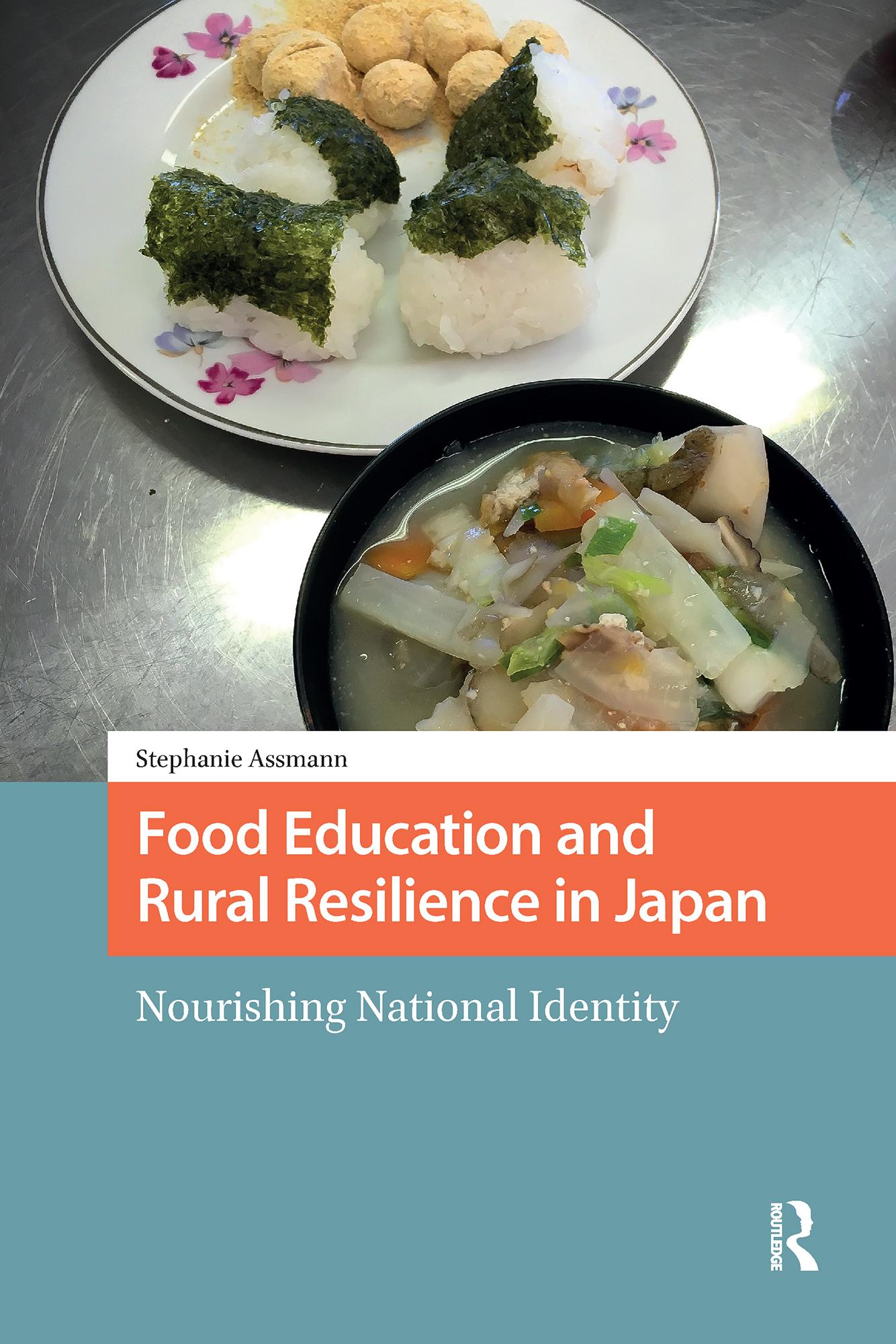
Food education initiatives exist worldwide, but Japan remains unique with its food education law known as shokuiku. The country’s impressive health metrics — high life expectancies, low obesity, and affordable health care — often lead observers to praise this approach. This book presents a more nuanced analysis. First, it challenges the assumption that food education is wholly a “good thing” by exposing underlying power mechanisms. Through food diagrams, food fairs, and school lunch programs, government ministries promote both nationalism and traditional gender roles. Second, it explores how food education operates in Japan’s rural regions, where educators champion resilience and food self-sufficiency to alleviate depopulation and economic decline. This emphasis on local food persisted even in the aftermath of the 2011 Fukushima nuclear disaster. Using Foucault’s concept of governmentality, historical contextualization, and extensive fieldwork in rural Japan, this study reveals the complex political agenda driving food education in a non-Western society.
Payez facilement par carte, Klarna, Apple Pay ou Google Pay. Pas satisfait ? Vous avez toujours une garantie de remboursement de 14 jours. En savoir plus dans nos conditions. Si vous avez des questions, envoyez-nous un e-mail à hello@memmo.org.
Memmo facilite tes études, où que tu sois dans le monde. On rassemble tes manuels de cours et des outils d'étude intelligents au même endroit : résumés, quiz, podcasts et flashcards. Et il y a Ted, ton compagnon d'étude qui répond à toutes tes questions. Plus de 50 000 étudiants étudient déjà ici – conçu pour t'aider à apprendre plus vite et à moins stresser.