
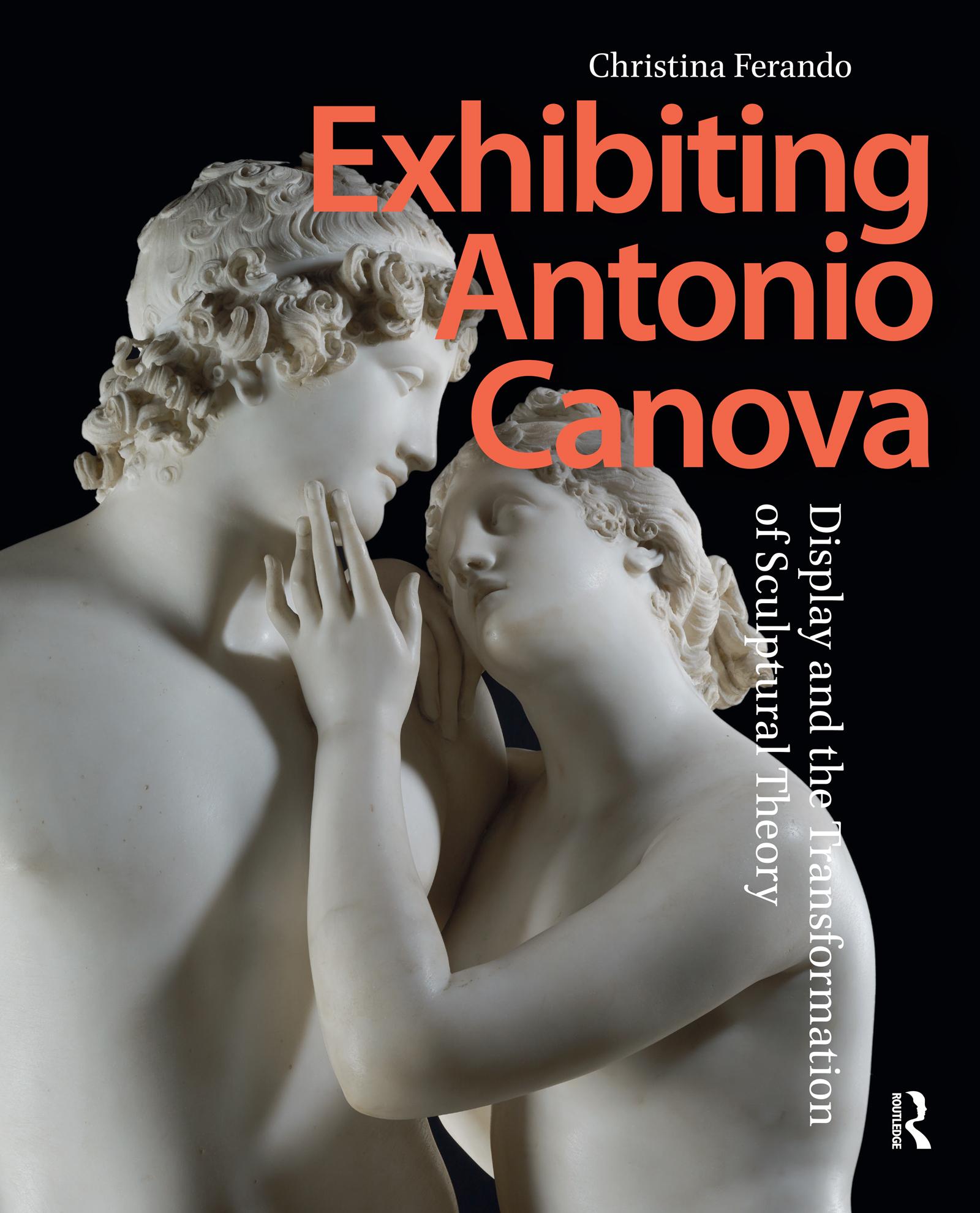
Exhibiting Antonio Canova: Display and the Transformation of Sculptural Theory argues that the display of Canova’s sculptures in the late eighteenth and early nineteenth centuries acted as a catalyst for discourse across a broad range of subjects. By enshrining his marble figures alongside plaster casts of ancient works, bathing them in candlelight, staining and waxing their surfaces, and even setting them in motion on rotating bases, Canova engaged viewers intellectually, physically, and emotionally. These displays inspired discussions on topics as diverse as originality and artistic production, the association between the sculptural surface, flesh, and anatomy, the relationship between painting and sculpture, and the role of public museums. Beholders’ discussions also shaped the legacy of important sculptural theories. They helped usher in their modern definitions and created the lenses through which we experience and interpret works of art, establishing modern attitudes not just towards sculpture, but towards cultural patrimony in general.
Payez facilement par carte, Klarna, Apple Pay ou Google Pay. Pas satisfait ? Vous avez toujours une garantie de remboursement de 14 jours. En savoir plus dans nos conditions. Si vous avez des questions, envoyez-nous un e-mail à hello@memmo.org.
Memmo facilite tes études, où que tu sois dans le monde. On rassemble tes manuels de cours et des outils d'étude intelligents au même endroit : résumés, quiz, podcasts et flashcards. Et il y a Ted, ton compagnon d'étude qui répond à toutes tes questions. Plus de 50 000 étudiants étudient déjà ici – conçu pour t'aider à apprendre plus vite et à moins stresser.