
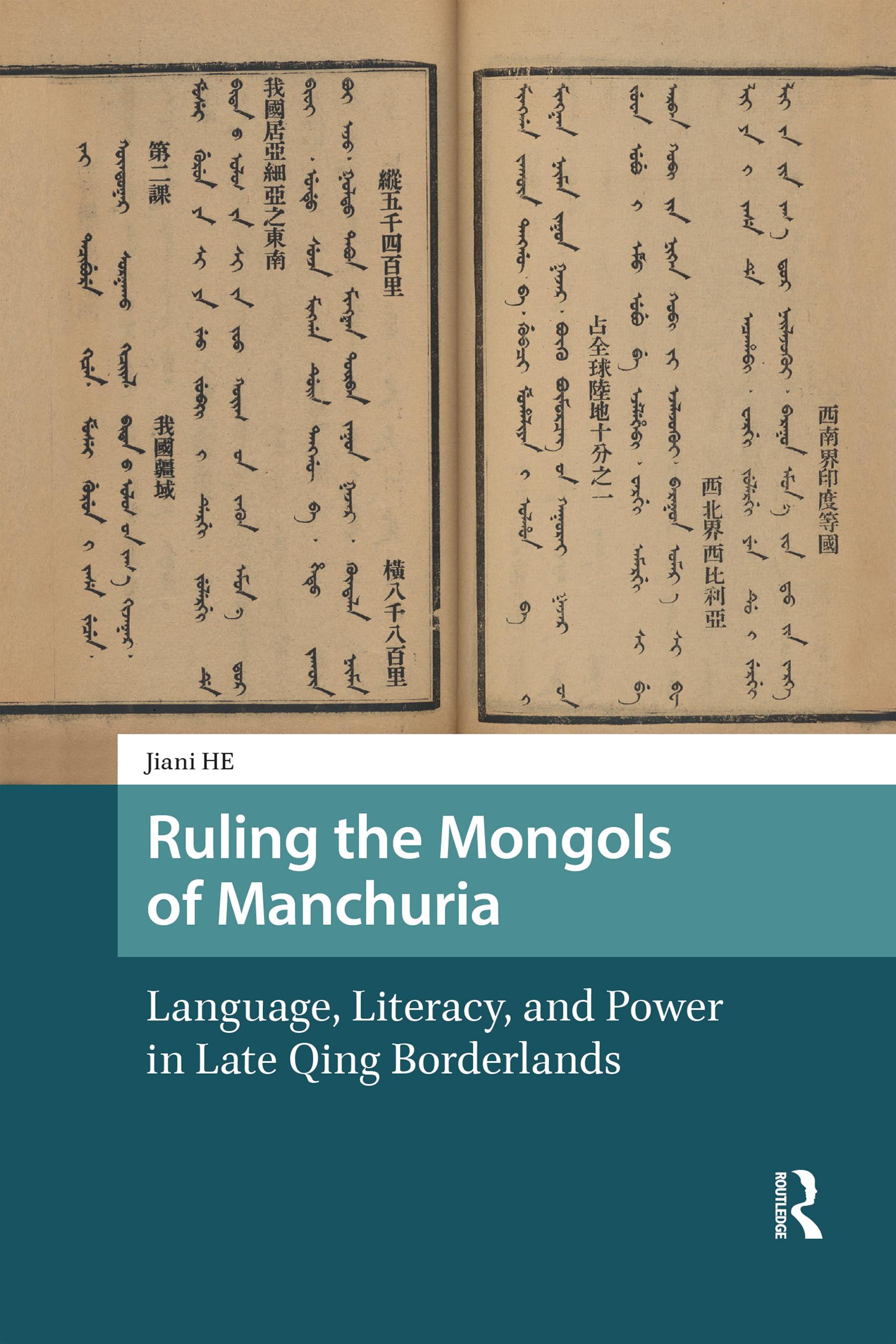
At the turn of the twentieth century, the Jirim League witnessed a linguistic struggle between Manchu, Mongol, Chinese, Japanese, and Russian powers. The Qing Empire envisioned a trilingual educational system, with the aim of improving the Jirim Mongols’ ability to read Chinese, Manchu, and Mongolian. Through this policy, the Qing sought to transform loyal imperial subjects into modern patriotic nationals and incorporate them into an integrated and united China under a Manchu constitutional monarchy. The late Qing’s language policy and strategy for ruling the Mongols of Manchuria was an attempt to address the enduring multilingual legacies in Qing administration and people’s everyday life, growing local ethnic tensions, cross-boundary connections, imperial rivalries, and the rise of new ideas concerning nation, modern state, and international relations in East Asia. This book challenges the notion of Chinese language reform as a story of linear progression towards national monolingualism, highlights the power of multilingualism in Chinese nationalist discourse from a peripheral, non-Han Chinese perspective, and questions the extent to which national languages dominate the writing of history.
Payez facilement par carte, Klarna, Apple Pay ou Google Pay. Pas satisfait ? Vous avez toujours une garantie de remboursement de 14 jours. En savoir plus dans nos conditions. Si vous avez des questions, envoyez-nous un e-mail à hello@memmo.org.
Memmo facilite tes études, où que tu sois dans le monde. On rassemble tes manuels de cours et des outils d'étude intelligents au même endroit : résumés, quiz, podcasts et flashcards. Et il y a Ted, ton compagnon d'étude qui répond à toutes tes questions. Plus de 50 000 étudiants étudient déjà ici – conçu pour t'aider à apprendre plus vite et à moins stresser.
Tu pourrais aussi aimer
Acheter le livre0