
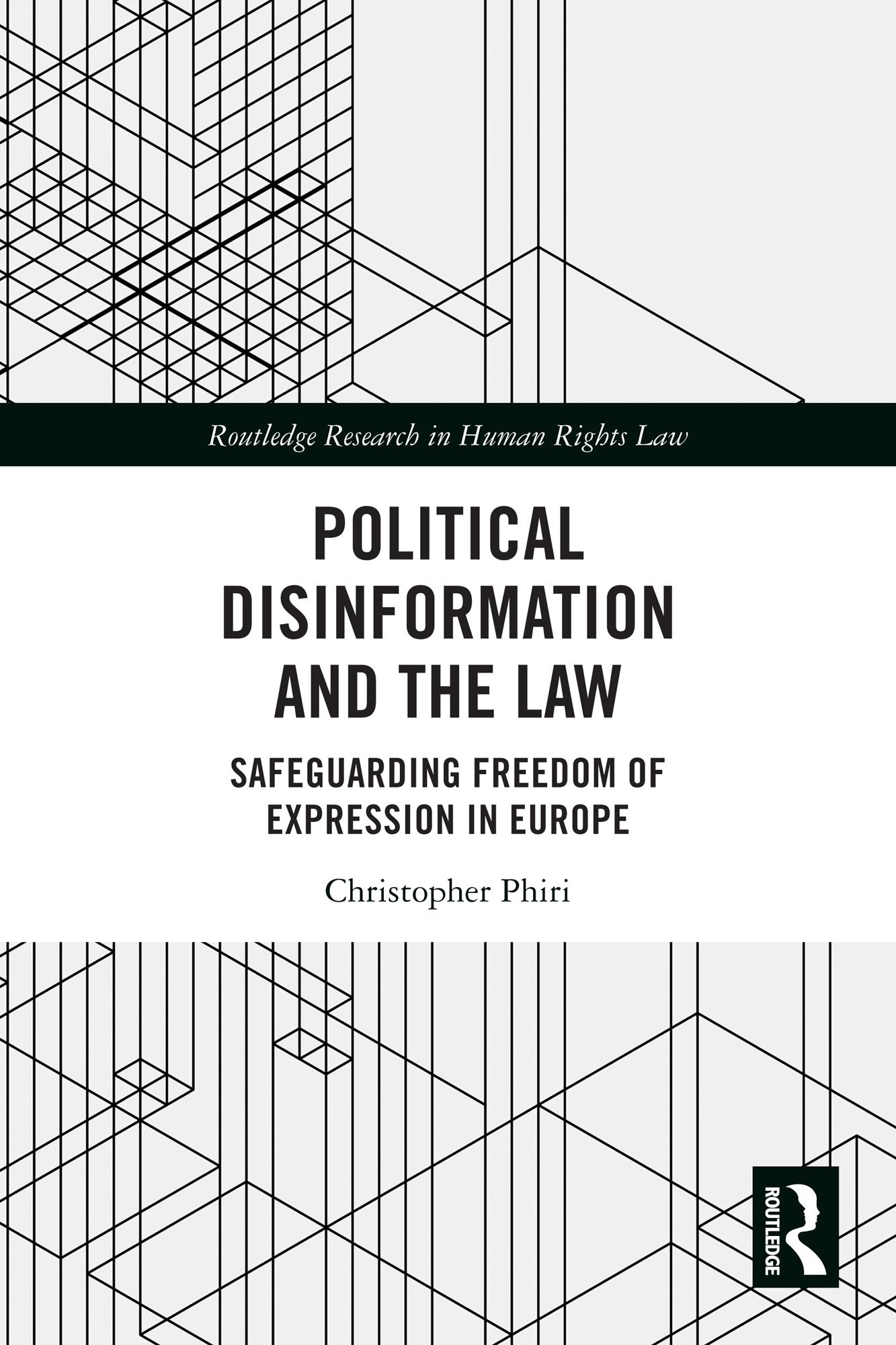
Political disinformation, broadly understood as disinformation relating to matters of public interest, presents a pervasive challenge in today’s information landscape. This book argues that the state can, and indeed has a duty to, regulate the phenomenon of political disinformation in a holistic manner, while both preserving and safeguarding freedom of expression, in particular by providing for a suitable combination of correction and sanction mechanisms. The book builds on relevant analytical and normative insights from the field of political philosophy and uses the legal framework of the Council of Europe as its main point of reference. It begins by dissecting key concepts underpinning the ongoing scholarly and policy discourse on disinformation, clarifying the meaning and scope of ‘freedom’ in general, and ‘freedom of expression’ in particular, as well as ‘disinformation’ in general, and ‘political disinformation’ in particular. This conceptual groundwork in turn helps make out the case for regulating political disinformation and informs the choice of the suggested regulatory strategies. The book promises to be a valuable resource for academics, judges and policymakers, particularly those working in the areas of human rights law, media law, public law, legal philosophy, media studies, communication studies and information science.
Payez facilement par carte, Klarna, Apple Pay ou Google Pay. Pas satisfait ? Vous avez toujours une garantie de remboursement de 14 jours. En savoir plus dans nos conditions. Si vous avez des questions, envoyez-nous un e-mail à hello@memmo.org.
Memmo facilite tes études, où que tu sois dans le monde. On rassemble tes manuels de cours et des outils d'étude intelligents au même endroit : résumés, quiz, podcasts et flashcards. Et il y a Ted, ton compagnon d'étude qui répond à toutes tes questions. Plus de 50 000 étudiants étudient déjà ici – conçu pour t'aider à apprendre plus vite et à moins stresser.