
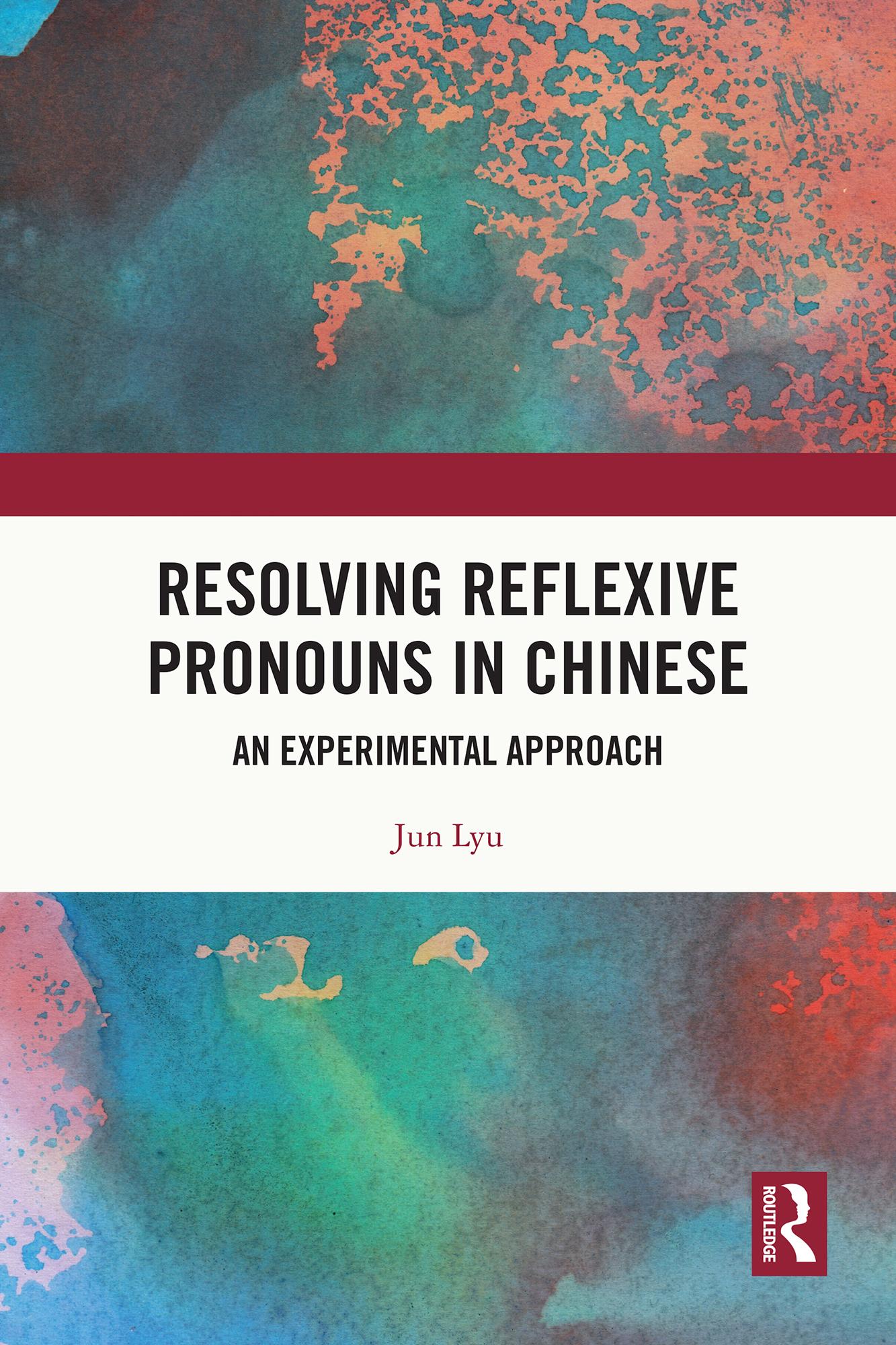
This book explores the resolution of Mandarin Chinese reflexive pronouns — ziji (‘self’) and ta-ziji (‘he/she-self’) — in language processing, focusing on how the human mind integrates multiple linguistic cues during comprehension through both theoretical and experimental approaches.
It investigates the structural, semantic, and discourse-level properties of these reflexives, examining how syntactic and non-syntactic constraints shape real-time resolution. By introducing new empirical data, the book challenges established assumptions about Chinese reflexives, addressing whether locality bias reflects syntactic or linear proximity, how discourse-level factors influence ta-ziji interpretation, and how perspective-taking interacts with syntactic prominence in processing. These findings are synthesized into a unified framework that integrates syntactic and non-syntactic factors governing reflexive resolution in Chinese.
This work is a valuable resource for researchers and graduate students in linguistics, psycholinguistics, syntax, semantics, and language processing, particularly those specializing in Chinese linguistics, anaphora resolution, and experimental approaches to theoretical linguistics.
Payez facilement par carte, Klarna, Apple Pay ou Google Pay. Pas satisfait ? Vous avez toujours une garantie de remboursement de 14 jours. En savoir plus dans nos conditions. Si vous avez des questions, envoyez-nous un e-mail à hello@memmo.org.
Memmo facilite tes études, où que tu sois dans le monde. On rassemble tes manuels de cours et des outils d'étude intelligents au même endroit : résumés, quiz, podcasts et flashcards. Et il y a Ted, ton compagnon d'étude qui répond à toutes tes questions. Plus de 50 000 étudiants étudient déjà ici – conçu pour t'aider à apprendre plus vite et à moins stresser.