
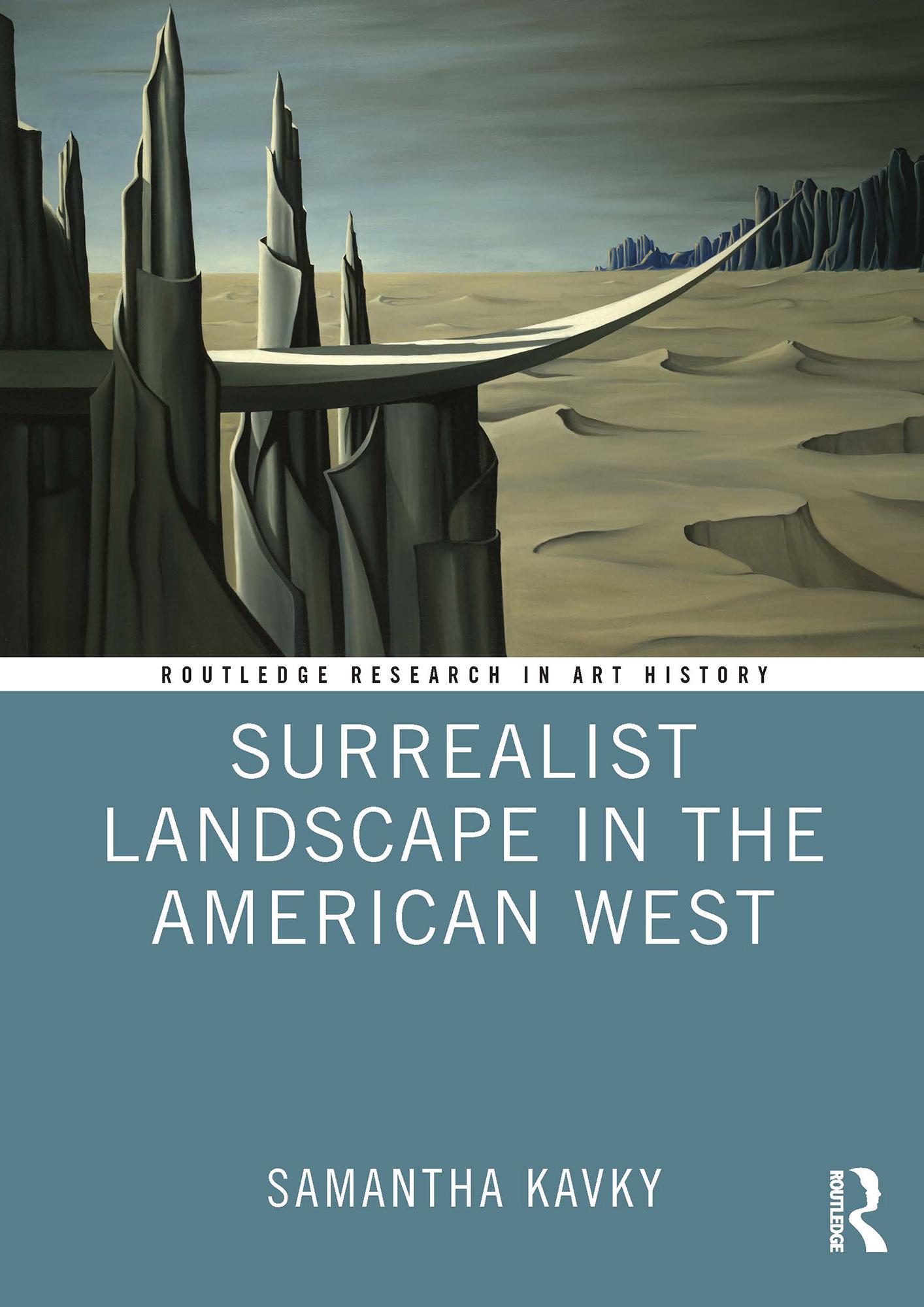
Focusing on the period of the Second World War, this book explores the emergence of surrealist landscape as a genre throughout the period of surrealist exile in the Americas.
By positioning surrealist landscape within the formal, iconographic, and theoretical strategies of the larger movement as well as within the historical context of war and exile, the volume encompasses critical and historical discussions from a broad spectrum of interrelated fields including psychology, anthropology, military history, art history, and ecocriticism. Central to this book are the landscapes of Max Ernst who, along with transplanted European surrealists, Wolfgang Paalen and Kurt Seligmann, revitalized a Romantic image of the American landscape and its indigenous peoples, divorced from, and as a challenge to, European nationalism. American surrealists Dorothea Tanning and Kay Sage challenged traditional analogies between the earth and the female body retained by their male partners. Other European surrealists such as Salvador Dalí and Yves Tanguy perpetuated the appropriation of the desert as a generic space for visionary projection.
The book will be of interest to scholars working in art history, surrealism, ecocriticism, American studies, and feminist studies.
Payez facilement par carte, Klarna, Apple Pay ou Google Pay. Pas satisfait ? Vous avez toujours une garantie de remboursement de 14 jours. En savoir plus dans nos conditions. Si vous avez des questions, envoyez-nous un e-mail à hello@memmo.org.
Memmo facilite tes études, où que tu sois dans le monde. On rassemble tes manuels de cours et des outils d'étude intelligents au même endroit : résumés, quiz, podcasts et flashcards. Et il y a Ted, ton compagnon d'étude qui répond à toutes tes questions. Plus de 50 000 étudiants étudient déjà ici – conçu pour t'aider à apprendre plus vite et à moins stresser.