
This book analyzes the context, process and content of the reform of married women’s property rights in seven Spanish-speaking South American countries – Argentina, Chile, Colombia, Ecuador, Peru, Uruguay and Venezuela – between 1900 and the early 1950s.
It investigates how the reforms enacted earlier in the United States, England and continental Europe and national antecedents and conditions informed the ideas of feminists, jurists and politicians and shows how their interaction influenced the content of the reforms attained. It highlights the role of feminists and their organizations in achieving stronger property rights, emphasizing their proposals to reform the civil code. The book argues that while most feminists framed their arguments in maternalist terms – that they needed stronger rights to be better wives and mothers – their proposals to reform the marital regime fell along a continuum that ranged from accepting the husband as sole household head to gender equality in marriage. Since the long-run goal was to attain equal civil and political rights, the book also demonstrates how these two demands for stronger property rights and suffrage influenced their strategies and what feminists were able to achieve.
This book contributes to a long-standing discussion on the relationship between socioeconomic and legal change and brings the findings of recent scholarship and a vast array of primary materials only available in Spanish to an English-speaking audience, interpreting legal concepts and debates in a manner accessible to social scientists. Written from an interdisciplinary perspective, it supports the construction of a feminist legal history of marital regimes. It will be of interest to historians, legal scholars and feminists across a range of disciplines.
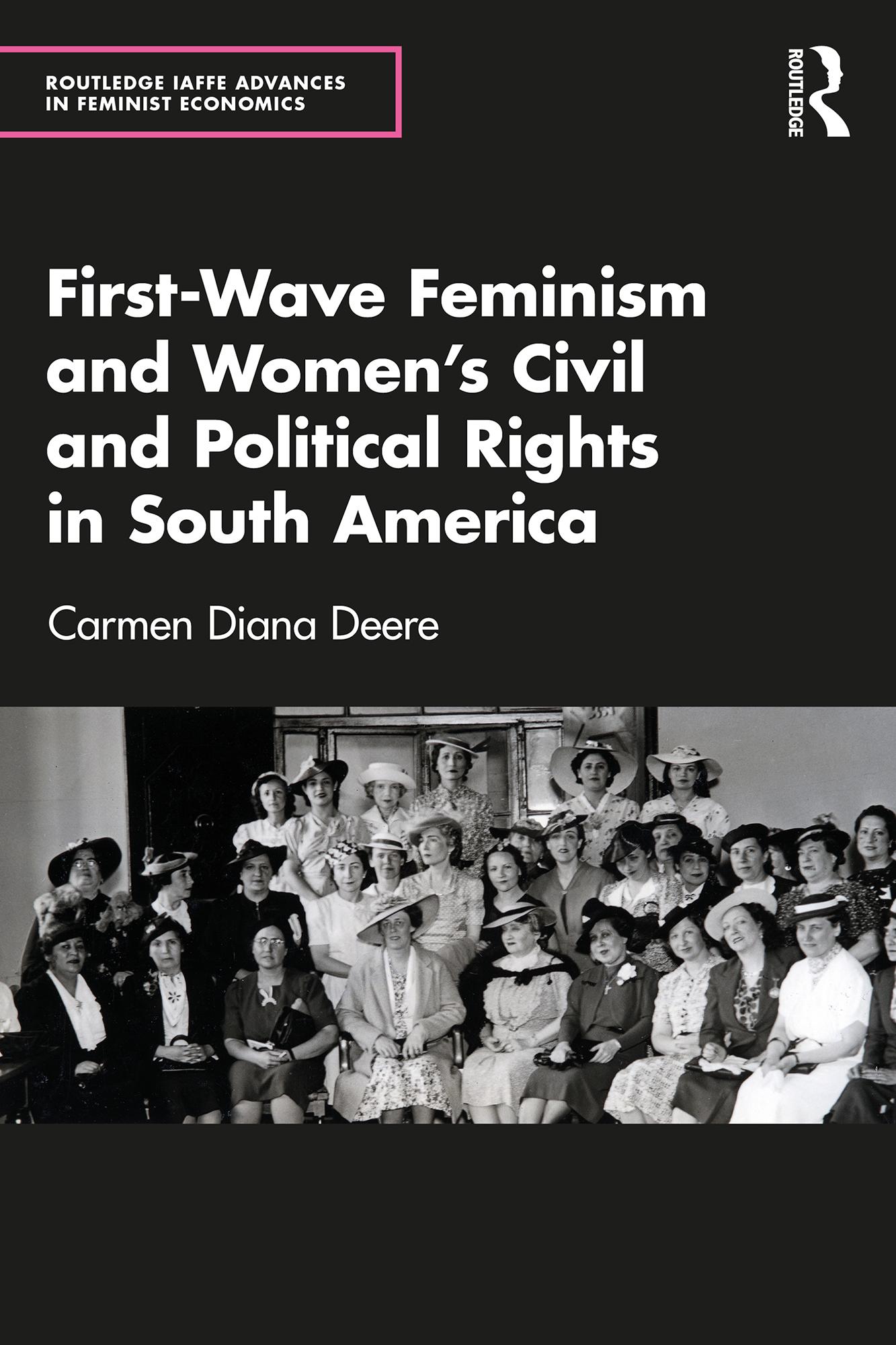
Cover image: Reception hosted by Feminismo Peruano Z.A.C. for members of the Inter-American Commission on Women attending the Eighth International Conference of American States in Lima, 1938. Courtesy of Schlesinger Library, Harvard Radcliffe Institute.
Payez facilement par carte, Klarna, Apple Pay ou Google Pay. Pas satisfait ? Vous avez toujours une garantie de remboursement de 14 jours. En savoir plus dans nos conditions. Si vous avez des questions, envoyez-nous un e-mail à hello@memmo.org.
Memmo facilite tes études, où que tu sois dans le monde. On rassemble tes manuels de cours et des outils d'étude intelligents au même endroit : résumés, quiz, podcasts et flashcards. Et il y a Ted, ton compagnon d'étude qui répond à toutes tes questions. Plus de 50 000 étudiants étudient déjà ici – conçu pour t'aider à apprendre plus vite et à moins stresser.