
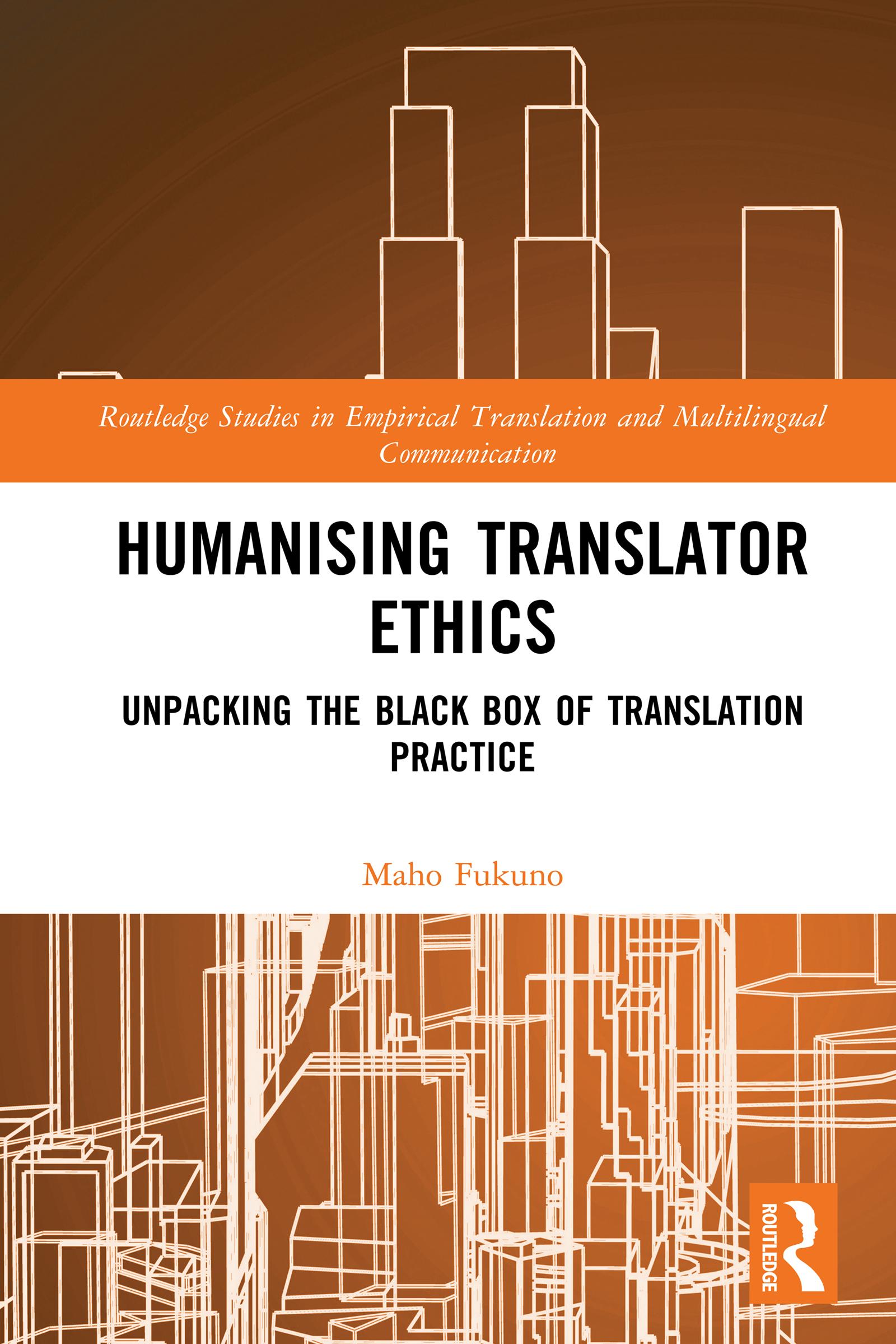
Fukuno illuminates the often-hidden journeys of individual translators and the moral, emotional and ideological complexities of their practice. It will help empower translators’ moral autonomy in translation practices.
Recognising and understanding translators’ ethically and morally interpretive work cannot eliminate all uncertainties in inter- and cross-cultural communications, nor can it make the black box of translators’ work completely transparent. However, to construct a meaningful discussion on how human translators, machine translation and people everywhere can cooperate to create a more just society, it is essential to acknowledge the diverse values, identities and practices as they are held, imagined and experienced by professional, human translators.
This book will be valuable to all students and researchers of translation and intercultural communication.
Payez facilement par carte, Klarna, Apple Pay ou Google Pay. Pas satisfait ? Vous avez toujours une garantie de remboursement de 14 jours. En savoir plus dans nos conditions. Si vous avez des questions, envoyez-nous un e-mail à hello@memmo.org.
Memmo facilite tes études, où que tu sois dans le monde. On rassemble tes manuels de cours et des outils d'étude intelligents au même endroit : résumés, quiz, podcasts et flashcards. Et il y a Ted, ton compagnon d'étude qui répond à toutes tes questions. Plus de 50 000 étudiants étudient déjà ici – conçu pour t'aider à apprendre plus vite et à moins stresser.