
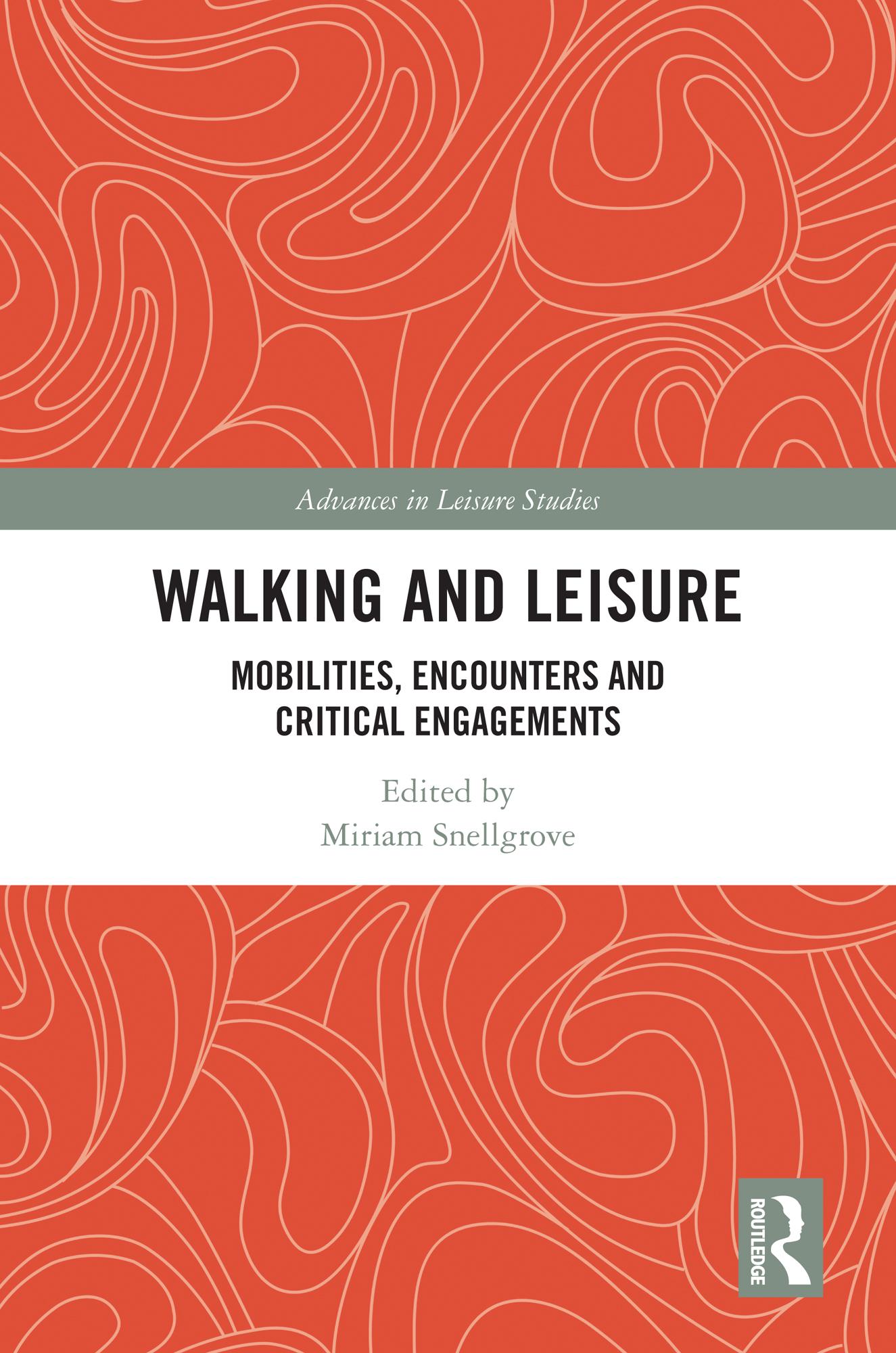
This book critically examines walking as a socially and politically situated leisure practice, exploring how movement through urban and rural spaces is shaped by broader structures of power and inequality.
While walking is often framed as a leisure activity with physical and mental health benefits, this book foregrounds its role as an embodied practice deeply influenced by intersecting factors such as class, race, gender, age and disability. Drawing on interdisciplinary theoretical perspectives and innovative methodological approaches, the chapters present empirically rich case studies from diverse global contexts—including the UK, Australia, Canada, Ireland, the Czech Republic, Austria, Hong Kong and Thailand. These studies range from pandemic walking and app-guided navigation to the experiences of mothers, disabled individuals, older adults, people with cancer, black women and those walking with animals. Together, they illuminate how walking practices negotiate space, place, identity and belonging, while also exposing spatial exclusions and embodied constraints.
Walking and Leisure offers a significant contribution to the sociology of leisure, human geography, cultural studies and critical disability studies. It will be of particular interest to scholars and students engaged in research on mobility, embodiment and the everyday politics of place and space.
Payez facilement par carte, Klarna, Apple Pay ou Google Pay. Pas satisfait ? Vous avez toujours une garantie de remboursement de 14 jours. En savoir plus dans nos conditions. Si vous avez des questions, envoyez-nous un e-mail à hello@memmo.org.
Memmo facilite tes études, où que tu sois dans le monde. On rassemble tes manuels de cours et des outils d'étude intelligents au même endroit : résumés, quiz, podcasts et flashcards. Et il y a Ted, ton compagnon d'étude qui répond à toutes tes questions. Plus de 50 000 étudiants étudient déjà ici – conçu pour t'aider à apprendre plus vite et à moins stresser.